

Posted by Happy Home Shopping Guyana
on October 17, 2026

What if the best spicy food challenge ended with everyone asking for another bite, not trying to prove who could endure the most heat? Extreme challenge videos can make the idea seem risky, especially when people at the table have different spice tolerances. Spicy food challenges to do at home can be playful, flavour-first and easy to adapt using familiar foods and small, optional amounts of heat.
This guide shares seven ways to make a home gathering more memorable, from tasting sauces to matching flavours and creating snacks. Each idea gives guests control over whether they taste chilli and how much they add. Set the rules before you begin, keep mild options on the table, and make stopping an ordinary choice. Texas Pete Sriracha Hot Chile Sauce can be an optional ingredient for guests who want it. The goal is curiosity, laughter and good bites, with no pressure to finish or prove anything.
Key Takeaways
- Choose from spicy food challenges to do at home, such as sauce tasting, flavour guessing or creative pairings.
- Use small, optional samples and let each person decide how much heat feels comfortable.
- Agree on friendly ground rules before you begin, including that anyone can stop at any time.
- Skip timed swallowing, forced portions and high-heat dares. Focus on describing flavours and getting creative.
- Try Texas Pete Sriracha Hot Chile Sauce 18oz as an optional ingredient, added to taste during a flavour-focused activity.
What Makes a Spicy Food Challenge Fun at Home?
A spicy food challenge at home is a playful tasting or cooking game where everyone can adjust the heat and nobody has to prove how long they can endure it. Viral dares may focus on extreme heat, but a relaxed gathering doesn’t need them. The best spicy food challenges to do at home invite people to explore flavour at their own pace, whether they enjoy a gentle tingle or would rather skip chilli altogether.
Capsaicin, a compound in chilli peppers, activates heat-sensing nerves. It creates a burning sensation without actually raising the temperature in your mouth. The amount and type of chilli can affect how a food tastes and feels. For a plain-language overview, see Capsaicin: The Chemical Behind the Heat.
Why flavour-first challenges suit a mixed group
A game can be about much more than heat. Ask guests to notice a dish’s aroma, compare its texture, guess an ingredient or suggest a pairing. A mild sample can be just as interesting to describe as a hotter one when the focus is on what people taste, not how much spice they can handle.
Let everyone control their own portion. Serve chilli separately, let guests add a little or none, and make tasting optional. People can join the conversation by describing a smell, choosing a topping or guessing an ingredient without eating a sample. This makes passing a normal choice rather than a letdown.
A flavour challenge explores taste and creativity; a pain-tolerance contest measures how much discomfort someone will endure. Keep the game firmly in the first category. No one should have to match another person’s portion or reaction.
How chilli heat is described
The Scoville scale describes the pungency, or perceived heat, of chilli peppers and chilli foods. It can help explain why different peppers are commonly described as having different levels of heat, but it can’t predict an individual guest’s tolerance. A scale description won’t tell you exactly how a particular bite will feel to each person.
People may experience the same food differently. Familiarity with spicy foods, personal sensitivity and portion size can all shape someone’s impression. Treat labels and scale descriptions as general context, not a challenge target or a reason to serve more. Start with small portions, ask guests what they notice and let each person decide whether to taste more. The conversation is the game, not a shared heat score.
How Spice Tolerance and Capsaicin Shape the Challenge
Capsaicin activates heat-sensing nerves, creating a burning feeling without actually raising the temperature in your mouth. That sensation can be enjoyable for one person and overwhelming for another, even with the same food. Familiarity with chilli, personal sensitivity, the amount tasted and the other ingredients in a dish can all affect how intense it feels.
Very spicy foods can cause discomfort, and people’s reactions aren’t identical. Don’t use a guest’s past experience or confident attitude as a reason to serve them more. A relaxed challenge leaves everyone free to choose a sample, enjoy it, or sit out a tasting without having to explain.
A good group challenge lets each person choose their heat, so shared fun never depends on matching anyone else. Keep that rule in mind when planning spicy food challenges to do at home.
What the Scoville scale can and cannot tell you
Scoville heat units (SHU) are used to compare the pungency of chilli peppers and chilli products. The scale offers general context, but a number or label can’t predict how comfortable a particular person will feel. It also doesn’t mean that two foods will taste equally hot to everyone.
Keep samples small and tasting optional instead of increasing the heat from round to round. If chilli is served with a dish, put it on the side so guests can decide whether to add any. Pause between tastes and let each person choose whether to continue. There’s no need to reach a hotter level for the game to count.
When to pause or stop a tasting game
Agree beforehand that anyone can stop immediately, without teasing, penalties or pressure to finish. A temporary burning sensation in the mouth is a common response to chilli, but participants shouldn’t be expected to push through discomfort. If someone wants to stop, remove their sample and let them take a break.
Pay attention to symptoms beyond ordinary mouth heat. Swelling or difficulty breathing needs urgent medical help. Severe or persistent symptoms, such as chest pain or repeated vomiting, also warrant prompt medical attention. Don’t try to diagnose what’s happening or encourage someone to keep tasting. Prioritise their wellbeing and seek appropriate help.
For a flavour-led tasting, offer Texas Pete Sriracha Hot Chile Sauce 18oz as an optional ingredient, added to taste rather than served as a test. Explore Texas Pete Sriracha Hot Chile Sauce as one possible addition to the table.
Which Spicy Food Challenge Fits Your Group Best?
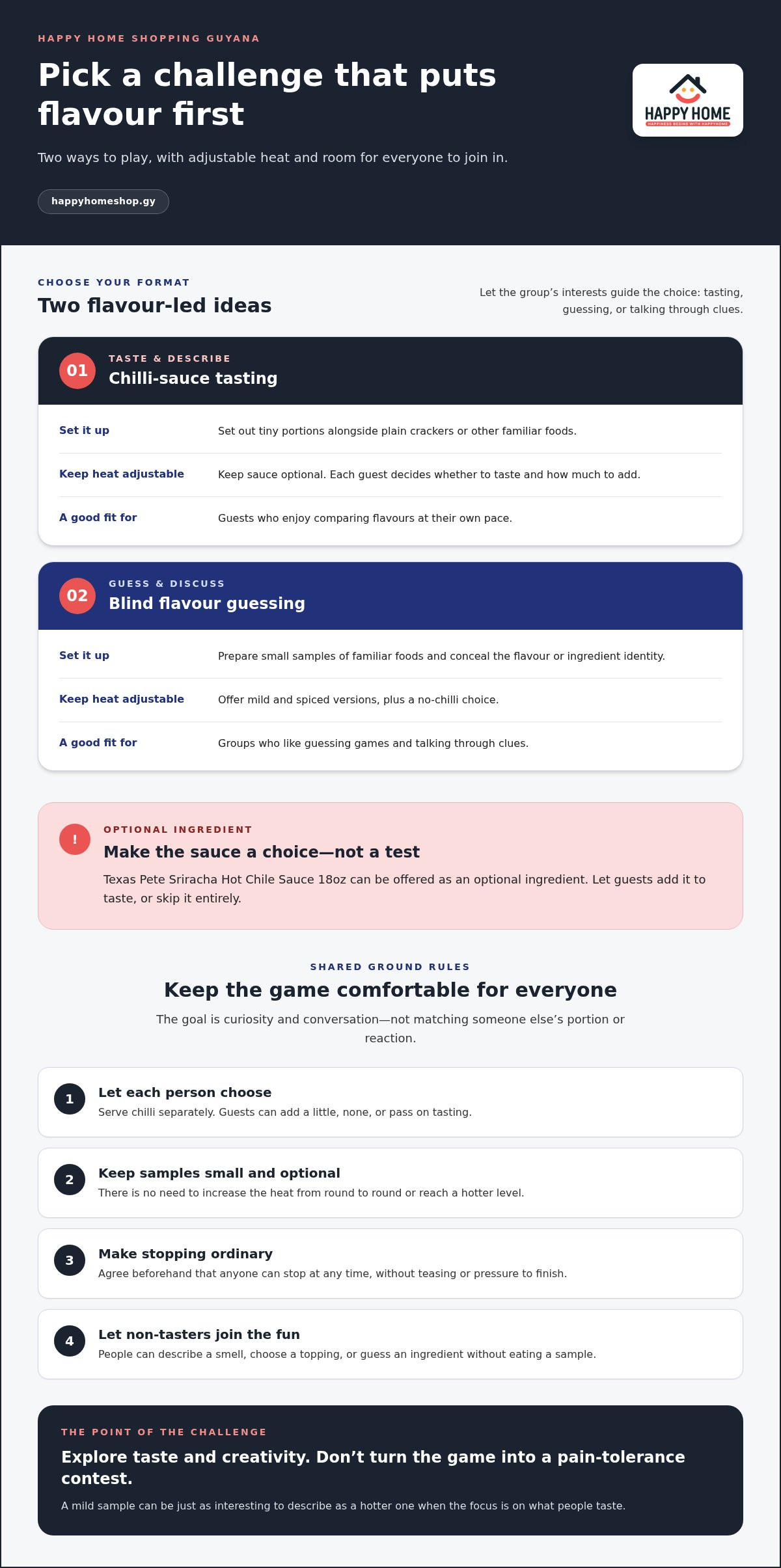
The right activity depends on what your guests enjoy: tasting, guessing, pairing ingredients or making something together. Choose a format that allows different heat levels and gives people a way to join in without eating chilli. Use this comparison to find an activity that fits your gathering.
| Activity | Preparation | Adjustable heat | Best-fit group |
|---|---|---|---|
| Chilli-sauce taste and describe | Set out tiny portions alongside plain crackers or familiar foods. | Keep sauce optional; let each guest choose whether and how much to taste. | Guests who enjoy comparing flavours at their own pace. |
| Blind flavour-guessing game | Prepare familiar foods in small samples and conceal the flavour or ingredient identity. | Offer mild and spiced versions, plus a no-chilli choice. | Groups who like guessing games and talking through clues. |
| Spicy snack remix | Choose a simple snack base and set out seasonings separately. | Add heat gradually to individual servings. | Creative guests who enjoy customizing food. |
| Aroma-and-flavour guessing | Use familiar herbs, spices, fruit or other fragrant ingredients for people to identify. | No chilli is needed; participation can be based on smelling and guessing. | Families and mixed groups looking for a gentle option. |
| Build-your-own spicy topping | Offer a familiar dish with toppings served in separate bowls. | Guests control every addition, including choosing none. | Groups with varied tastes who want an easy shared meal. |
| Sweet-and-spicy pairing | Put a familiar sweet food beside a mild base and optional chilli sauce. | Each guest can taste the pairing without adding chilli, or add sauce to their own portion. | Guests who enjoy trying flavour combinations. |
| Make two versions of one snack | Prepare a mild base, then set out separate toppings for guests to customize. | Keep the shared base mild and let each person decide whether to add heat. | Groups who want to compare ideas without comparing tolerance. |
Tasting and guessing games
Give each round a simple aim: name a flavour note, match two similar samples or guess which familiar ingredient is included. For a sauce round, offer a tiny amount of Texas Pete Sriracha Hot Chile Sauce 18oz alongside a plain option, and make tasting entirely optional. Keep ingredients visible or share them on request so guests can choose what feels comfortable.
Make sure there’s a way to play without tasting. A guest can guess by aroma, identify a mild sample or help keep score without trying chilli. The game stays sociable when curiosity matters more than getting every answer right.
Cooking and snack-making challenges
For a creative round, let pairs or small teams choose a familiar base, such as a savoury snack or simple dip, then customize it with separate seasonings. Judge creativity, balance and presentation rather than the highest heat. Keep the shared batch mild and let each person add sauce to their own serving. One person’s preferred spice level shouldn’t set the portion for the whole group.
How to Set Up a Spicy Food Challenge at Home
A little preparation helps keep spicy food challenges to do at home relaxed, clear and enjoyable. Set expectations before serving anything, and make the mild choice just as welcome as the spicy one.
- Choose a game. Pick a tasting, guessing, pairing or snack-making activity with a flavour-focused goal.
- Check ingredients. Read labels for chilli and common allergens, and tell guests what’s in each sample.
- Set limits. Keep samples small and make it clear that nobody has to try a particular ingredient or heat level.
- Prepare separate portions. Keep chilli and sauces apart from the main food so each person can decide what to add.
- Agree on stopping. Make pausing, opting out or ending the game an ordinary choice, not a reason for teasing or penalties.
Prepare ingredients and clear ground rules
Before guests arrive, arrange small portions in separate dishes and provide a serving utensil for each one. This helps guests control how much goes onto a plate and reduces accidental cross-contact between samples. Keep ingredient labels or packaging available so guests can check what’s included, especially if they avoid particular foods.
State the ground rules plainly: tasting is optional, mild food is always available, and anyone can stop at any time without penalty. Skip high-heat dares, timed swallowing, forced portions and pressure to finish. The activity is about enjoying food together, not testing endurance.
Make the activity comfortable for guests
Keep water and suitable non-spicy foods nearby, such as plain bread or crackers. Water can be useful to drink, but it doesn’t dissolve capsaicin, the chilli compound that causes the burning sensation. Dairy foods may offer comfort for some people, but don’t promise that any food or drink will relieve the feeling for everyone. Let guests choose what they’d like and pause the activity if they’re uncomfortable.
Use clean utensils for each dish and don’t return a used spoon to a shared bowl. Avoid turning participation into a dare, punishment or public spectacle. A guest who chooses to smell a sample, describe its ingredients or simply enjoy the non-spicy snacks is still part of the gathering. If someone has swelling or difficulty breathing, seek urgent medical help.
For a simple flavour-led tasting, set Texas Pete Sriracha Hot Chile Sauce 18oz on the table as an optional addition, with each guest controlling their own serving. Shop Texas Pete Sriracha for an ingredient to offer alongside mild choices.
Make a Flavour-First Spicy Challenge with Texas Pete Sriracha
Turn a sauce tasting into a relaxed game of discovery, not a contest to see who can handle the most heat. Texas Pete Sriracha Hot Chile Sauce 18oz can be one optional ingredient: let guests decide whether to try it and how much to add. Focus on describing flavours, textures and combinations, with no heat ranking or required tasting.
Try a build-your-own spicy snack round
Set out a few familiar snack bases, such as crackers, plain chips or pieces of bread, along with simple toppings. Give each person a separate plate and keep the sauce apart from the food. Guests can add it to taste, leave it off or create a completely mild version. Separate servings make it easier for everyone to customize without changing the shared food.
Invite participants to describe what they notice. Does a topping make the snack taste sweeter, savourier or brighter? Which texture works best with the base? What would they pair with it next time? There’s no need to name a winner. Anyone who doesn’t want to taste can still suggest combinations or share observations about the ingredients.
Turn the challenge into a shared home-cooking moment
For a little teamwork, ask pairs or small groups to create a snack or topping combination using a chosen base and a few available ingredients. Keep the sauce optional and let each person customize their own portion. Teams can explain why they chose their ingredients and how they wanted the flavours and textures to work together.
Keep judging light and voluntary. Guests might vote for the most creative idea, the best-looking plate or a pairing they’d like to try again. Don’t award points for consuming more sauce or tolerating stronger heat. The point is to share ideas, enjoy the food and make room for different preferences around the same table.
To make the activity easy to follow, set out a mild base, separate toppings, clean serving utensils and small plates before starting. Tell everyone that tasting is optional, and let guests add sauce only to their own serving. For product context before planning your tasting, read the Texas Pete Sriracha buying guide. You can also explore the store for home food favourites to enjoy alongside your challenge.
Make Your Next Gathering a Little More Playful
Choose one easy idea for your next get-together, then let the group shape the details. Guess a flavour note, customize a snack or sample a sauce. Each can spark conversation without turning dinner into a test of endurance. The most memorable spicy food challenges to do at home leave room for different tastes, unexpected pairings and plenty of laughter.
If you’d like to include a sauce, Texas Pete Sriracha Hot Chile Sauce 18oz is available as an optional ingredient to add to individual servings. Happy Home Shopping Guyana serves customers across Guyana through online ordering and local delivery, making it easy to explore food favourites for your home.
Explore food favourites for your home, and get inspired for a relaxed, flavour-filled gathering. Keep portions personal, rules kind and the fun shared.
Frequently Asked Questions
Can spicy food challenges be fun without eating extremely hot chilli?
Yes. A challenge can be about noticing flavours rather than seeking intense heat. Try matching a seasoning to its aroma, describing a sauce’s flavour or inventing a topping for a familiar snack. For spicy food challenges to do at home, make tasting optional and count creativity or good guesses instead of chilli tolerance. Guests who prefer not to eat can still join by choosing ingredients or sharing observations.
What should you drink if spicy food feels too hot?
Milk or another dairy food may ease the burning sensation for some people, though it isn’t a guaranteed fix. A few spoonfuls of plain yoghurt can be an option if the person can safely eat dairy. Stop tasting, offer a mild food if wanted and let the person choose what feels comfortable. Don’t urge them to eat or drink anything they’re allergic to or don’t want.
Is water useful for relieving a chilli burn in your mouth?
Water can help with thirst, but it doesn’t dissolve capsaicin, the compound behind chilli’s burning sensation, so it may not ease the burn much. Stop eating the spicy sample and offer a non-spicy food or dairy option if suitable. Give the person time, and don’t encourage another taste until they’re comfortable.
Can children take part in spicy food challenges?
Children can join the social side of a food game without being asked to taste chilli. Let them smell familiar ingredients, guess a mild flavour, draw a snack idea or help arrange toppings, with an adult overseeing the activity. Don’t make spicy tasting a dare, reward or test of bravery. If a child does try any food, a caregiver should decide what is appropriate and check ingredients first.
How can you make a spicy food challenge fair for people with different spice tolerances?
Make the shared goal something everyone can attempt, such as naming flavour notes or designing a snack, rather than comparing who eats the most chilli. Keep sauces and seasonings separate, and let each person choose their own additions. Offer roles such as taste describer, ingredient guesser or scorekeeper. That way, people can participate without eating the same sample or amount.
What symptoms after eating spicy food mean someone should get medical help?
Seek urgent medical help if someone develops swelling or difficulty breathing after eating. Chest pain, faintness or severe, persistent symptoms also call for prompt medical attention. Stop the activity and don’t ask the person to taste more or try to diagnose the cause. A burning mouth can occur after chilli, but symptoms that seem serious or are getting worse should be treated with care.
Can you use Texas Pete Sriracha in a spicy food challenge?
Yes. Texas Pete Sriracha Hot Chile Sauce 18oz can be offered as an optional ingredient in a flavour-focused activity. Put it beside separate portions of a familiar snack so each guest can decide whether to add any, and how much. Invite participants to describe the flavour or suggest pairings, without assigning the sauce a heat rating or making tasting a requirement.
