

Posted by Happy Home Shopping Guyana
on September 26, 2026

What if the secret to salsa that’s easy to scoop isn’t a special tool, but a steadier cut? If tomatoes turn mushy under your knife or leave a puddle in the bowl, you’re not alone. The best way to dice tomatoes for salsa is to start with fruit that’s ripe but still firm, then use a sharp knife and a simple cutting sequence to help the pieces hold their shape.
Even pieces mix more consistently with herbs and other ingredients. This guide shows you how to wash and core tomatoes, slice them into strips, and cut across the strips for a neat dice. You’ll also learn how to choose a smaller or larger cut, manage extra juice, and avoid common cutting mistakes. Roma tomatoes are a naturally meaty option, but other varieties can work well if you drain some of their liquid. Follow the knife method below, or consider an optional chopper if you prefer tool-assisted prep.
Key Takeaways
- Use a sharp knife and gentle, steady cuts to help keep tomato pieces neat.
- Wash and dry the tomatoes, remove the cores, slice into strips, then cut across the strips on a stable board.
- Keep or drain the seeds and juice according to whether you prefer a looser or thicker salsa.
- Avoid pressing too hard or cutting unevenly, which can affect the salsa’s texture.
Best way to dice tomatoes for salsa: start with the right tomato and texture
The best way to dice tomatoes for salsa is to use a sharp knife and make steady, even cuts. Choose tomatoes that are ripe but firm enough to hold their shape. Then decide how chunky or spoonable you want the salsa to be. Very soft tomatoes are harder to cut neatly and may release more liquid as you work.
A salsa-ready tomato dice consists of distinct, similarly sized pieces that hold their shape in the bowl, not a mashed or puréed mixture. That even cut helps tomato combine with ingredients such as onion and pepper. In Pico de gallo, a fresh, uncooked salsa made with chopped ingredients, recognizable pieces make each scoop easy to enjoy.
Which tomatoes work well for fresh salsa?
Choose tomatoes that feel ripe but remain slightly firm when handled gently. Their flesh is easier to slice cleanly, while very soft fruit is more likely to collapse under the knife and leave extra juice on the board. You don’t need one specific variety. Use what looks good and is available, keeping in mind that firmness affects the finished texture.
Roma tomatoes are a naturally meaty option. If you use a juicier variety, you can decide after dicing whether to keep or drain some of the liquid. The right choice depends on how thick you like your salsa.
How large should salsa tomato pieces be?
There’s no single correct size for every salsa. Cut smaller pieces if you want the tomato to mix evenly with the other ingredients. Choose larger pieces for a chunkier salsa where the tomato stands out. Either way, aim for pieces that are similar in size rather than measuring each one.
Consistent cuts help each scoop bring together tomato and the other ingredients, instead of leaving some bites mostly tomato and others mostly onion or pepper. As a practical guide, make the pieces small enough to scoop comfortably with your usual serving spoon. Adjust the cut to suit your salsa style.
How to dice tomatoes for salsa with a knife, step by step
A stable board and a sharp kitchen knife make the cuts easier to control and help keep tomato flesh intact. The best way to dice tomatoes for salsa is to work gently. Let the blade do the cutting rather than pressing down on the fruit.
Prepare the tomato and cutting board
Wash the tomato under clean running water and dry it well so it’s easier to hold. Set your cutting board on a steady surface. If it shifts, place a damp towel underneath. Keep the fingertips of your supporting hand curled away from the blade as you work.
Trim out the stem core before slicing. Hold the tomato securely and use the knife tip to cut a shallow circle around the stem, directing the blade away from your supporting hand. Lift out the core, then set the tomato on its side for the next cut.
Cut tomato halves into even salsa pieces
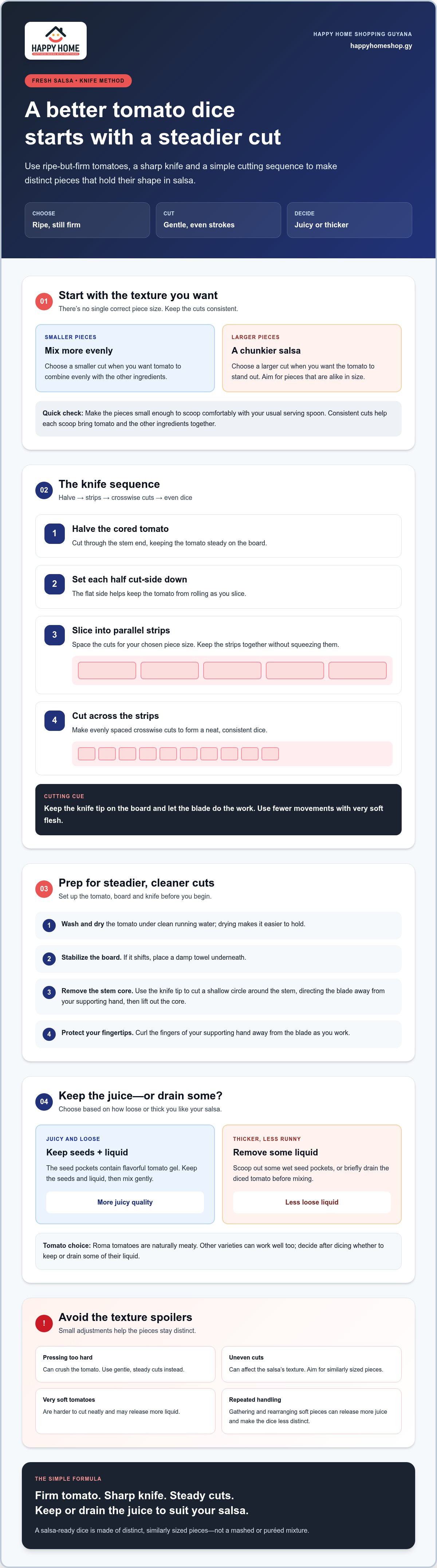
Here’s the sequence: halve the cored tomato, set each half cut-side down, slice it into parallel strips, then cut across the strips to make an even dice. This method is also described in Food Network’s guide to how to dice a tomato.
- Halve the tomato. Cut through the stem end, keeping the tomato steady on the board.
- Place each half cut-side down. The flat surface helps keep it from rolling while you slice.
- Make parallel strips. Use steady strokes, spacing the cuts to get the piece size you want. Keep the strips together without squeezing them.
- Cut across the strips. Make evenly spaced crosswise cuts to form consistent pieces.
Keep the knife tip on the board and guide the blade through the tomato without forcing it. If the flesh is very soft, use fewer movements and avoid repeatedly gathering or rearranging the pieces. Extra handling can release more juice and make the dice less distinct.
Prefer a tool-assisted approach? You can explore the Yusshn 12 IN 1 Vegetable Chopper as an optional alternative. Check the current product details before choosing it.
Should you remove tomato seeds and juice before making salsa?
Keep or remove the seeds and juice according to the texture you want. The seed pockets contain flavorful tomato gel, while their liquid can make salsa looser. Before draining anything, decide whether you want that juicy quality or a thicker mixture.
| Your preferred salsa | What to do with the seeds and juice |
|---|---|
| Juicy and loose | Keep the seeds and tomato liquid, then mix gently with the other ingredients. |
| Thicker and less runny | Scoop out some seed pockets or briefly drain the diced tomato before mixing. |
When should you remove seeds or excess liquid?
Consider removing some seed pockets if the tomatoes are especially juicy or your recipe needs a thicker result. Cut the tomato in half and use a spoon to lift out only the wet seed pockets you want to discard. Leave as much flesh as possible. There’s no need to remove seeds because you think they’re unsafe.
How can you keep salsa from turning watery?
Drain the tomatoes only if the mixture needs a firmer texture. After dicing, place them in a strainer over a bowl and let excess liquid run off briefly. Check the texture as you go. Draining too much can leave the salsa less juicy than you intended. You can save the drained liquid for another use rather than letting it go to waste.
Mix the diced tomato with the other ingredients shortly before serving if you want the pieces to stay fresh and distinct. Salt draws moisture from cut vegetables, so salsa may become looser as it sits after seasoning. Add salt with your preferred serving time in mind, then taste and adjust before serving.
Simple rule: Keep more tomato liquid for juicier salsa, and drain more for a thicker bowl. Let your preferred consistency guide the choice, not a blanket rule about seeds.
Common tomato-dicing mistakes that can spoil salsa texture
Good knife work is gentle and controlled. A few small adjustments can help preserve the tomato’s shape and make the finished salsa easier to scoop, even if your first cuts aren’t perfect.
- Dull knife: A blade that drags through the skin can squash the flesh. Use a sharp kitchen knife and steady strokes.
- Uneven pieces: Large and small chunks can make each scoop feel inconsistent. Keep the strips together and space your crosswise cuts evenly.
- Too much pressure: Pressing hard can crush ripe flesh. Guide the blade through the tomato instead of bearing down.
- Unsteady tomato: Cutting while the tomato rolls can lead to slips and misshapen pieces. Pause, reposition it on a flat side, then continue.
Why do tomatoes get crushed instead of diced?
A dull blade or excessive pressure can squash a ripe tomato rather than cut cleanly through it. Start with a tomato firm enough to hold its shape, use controlled strokes, and keep your supporting fingertips curled away from the blade. If the fruit shifts, stop and set it securely on a flat cut side. Don’t force the knife through an unstable tomato.
Very soft or overripe tomatoes may still be useful. Handle them gently and expect a softer result, or use them for a salsa style where a less distinct tomato texture is welcome. The best way to dice tomatoes for salsa depends partly on the fruit you have, so adjust your cuts instead of pressing harder to make soft pieces behave like firm ones.
Can a vegetable chopper dice tomatoes for salsa?
A vegetable chopper can be a convenient alternative, while hand-cutting gives you direct control over the size and shape of each piece. Soft tomatoes may come out uneven or mushy in some tools, so choose tomatoes that hold their shape and follow the tool’s instructions. For details on the Yusshn 12-in-1 vegetable chopper, review its guide before use.
Quick texture fixes before serving:
- If the pieces are too large, make a few careful crosswise cuts instead of chopping repeatedly.
- If the salsa seems too loose, drain off a little excess tomato liquid.
- If the tomatoes look crushed, fold the mixture gently and avoid further stirring.
- If the pieces are soft but the salsa tastes good, serve it as a softer, more spoonable style.
Prefer a tool-assisted option? Explore the vegetable chopper option and check the current product details before choosing it.
Finish your salsa confidently with the right cutting method
A neat, fresh salsa comes down to a few choices: select a ripe tomato that still feels firm, keep it steady on the cutting board, slice it into even strips, then cut across the strips. This sequence gives you control over the pieces without pressing the tomato into a purée. The best way to dice tomatoes for salsa also leaves room to adjust the texture after mixing.
Keep the seeds and juice for a looser, juicier salsa. For a thicker bowl, remove some seed pockets or drain a little liquid from the diced tomato. Then taste the finished mixture before making further changes. If it needs more brightness or seasoning, adjust the other ingredients rather than cutting the tomatoes smaller and smaller.
A quick checklist before you serve
- Check the pieces: They should be broadly consistent and comfortable to scoop, not crushed or mashed.
- Check the liquid: Drain some only if you prefer a thicker salsa. A little tomato juice can be part of the texture you want.
- Taste and adjust: Stir gently, taste, then make small seasoning adjustments to balance the bowl.
- Use clean utensils: Serve with a clean spoon, and refrigerate leftovers promptly. USDA Food Safety and Inspection Service guidance says to discard salsa left at room temperature for more than two hours.
Fresh salsa is at its best when the pieces still look distinct and the bowl suits the way you plan to serve it. If it’s meant for dipping, a thicker consistency may be easier to scoop. For a looser topping, keeping more tomato juice can help the ingredients come together.
Make prep easier with a kitchen tool when useful
A sharp knife and cutting board remain practical when you want direct control over tomato size. If you prefer a tool-assisted option for prep, the Yusshn 12 IN 1 Vegetable Chopper may be worth considering. It isn’t required for neat salsa, and it’s sensible to check the product details and follow the instructions. Explore the kitchen chopper guide to learn more about this optional tool.
Make your next bowl of salsa fresh and scoopable
The best way to dice tomatoes for salsa is to start with ripe fruit that still holds its shape, then use steady cuts to make even pieces. Keep or drain the seeds and juice according to the texture you enjoy: more liquid for a juicier salsa, less for a thicker bowl. Taste before serving and adjust the seasoning gently rather than overworking the tomatoes.
A sharp knife and stable cutting board are all you need to follow the method. If you prefer a tool-assisted option, the Yusshn 12 IN 1 Vegetable Chopper is available from Happy Home Shopping Guyana. The retailer serves customers across Guyana through online ordering and local delivery. Explore the vegetable chopper online and check its current product details to decide whether it suits your meal prep. With a little care, you’ll be ready to serve salsa with fresh flavor and a texture that’s easy to enjoy.
Frequently Asked Questions
What is the best way to dice tomatoes for salsa?
Use a sharp knife and controlled, even cuts. Wash and dry a ripe but firm tomato, remove the stem core, then cut it in half and place each half cut-side down. Slice into parallel strips, keep them together, and cut across the strips. Choose smaller or larger pieces to suit the salsa texture you enjoy.
Should you remove the seeds when dicing tomatoes for salsa?
Removing seeds is optional and depends on how thick you want your salsa. The seed pockets contain tomato gel and juice, so keeping them makes the mixture juicier. For a thicker result, scoop out some of the pockets with a spoon or briefly drain the diced tomato. Remove only as much as needed. There’s no need to discard the seeds for safety or by default.
How do you dice a tomato without crushing it?
Use a sharp knife, a stable cutting board, and light, controlled strokes. A dull blade or pressing too hard can squash ripe flesh instead of slicing through it. Choose a tomato that feels ripe but still holds its shape, and set it cut-side down so it won’t roll. If it shifts, pause and reposition it rather than forcing the blade through an unstable tomato.
What size should tomato pieces be for salsa?
Choose the size based on the texture you want rather than following a fixed measurement. Smaller, similar-sized pieces mix easily with onion, pepper, and other ingredients for a more evenly combined salsa. Larger pieces create a chunkier texture and make tomato more noticeable in each scoop. Keep the cuts broadly consistent so the ingredients are easy to scoop together.
Can you use a vegetable chopper to dice tomatoes for salsa?
A vegetable chopper can be an alternative if you prefer tool-assisted prep, while a knife gives you more direct control over piece size. Very soft tomatoes may turn out uneven or mushy in some tools, so start with firmer fruit and follow the chopper’s instructions. Avoid assuming every chopper handles tomatoes the same way, and check the product details before use.
How do you keep fresh tomato salsa from becoming watery?
For thicker salsa, remove some seed pockets or briefly drain diced tomatoes before mixing. Keep more juice if you prefer a looser consistency. Salt can draw moisture from cut vegetables, so the salsa may release more liquid as it sits. Mix the tomatoes with the other ingredients shortly before serving, then taste and adjust the seasoning without over-stirring.
Can you dice tomatoes ahead of time for salsa?
Yes, you can dice tomatoes ahead, but they may release liquid as they sit and their pieces may soften. Refrigerate them promptly in a covered container, and drain excess liquid before mixing if you want a thicker salsa. For the freshest texture, combine them with the other ingredients closer to serving time. The USDA Food Safety and Inspection Service advises discarding salsa left at room temperature for more than two hours.
