

Posted by Happy Home Shopping Guyana
on October 16, 2026

What if tomorrow’s work lunch could be familiar, filling, and ready without a morning scramble? If you’re searching for “easy lunch ideas for work Guyana,” you don’t need complicated recipes or a different menu every day. A little planning can turn much-loved flavours into meals that travel well and still taste good at lunchtime.
It’s easy to run out of ideas when the workweek gets busy, especially when lunch needs to balance convenience, variety, and a satisfying portion. This guide brings together practical options inspired by Guyanese favourites, from cook-up rice and roti with curry to rice, dhal, vegetables, and protein. You’ll also find a straightforward way to prepare components ahead and combine them in different ways. Pack a lunch that feels like home without making weekday mornings harder.
Key Takeaways
- Make easy lunch ideas for work Guyana more manageable by building meals from flexible ingredients you already have.
- Use a simple mix-and-match approach to create filling lunches without starting from scratch each day.
- Compare rice bowls, wraps, and vegetable-forward meals by prep effort, portability, and whether they’re best reheated.
- Prepare a few components ahead, then vary the combinations through the workweek.
- Use the Yusshn 12 IN 1 Vegetable Chopper to prepare chopped vegetables for wraps, bowls, and other lunches.
Easy lunch ideas for work in Guyana: start with a packable meal
Choosing lunch for a workday can feel like one more decision in a busy morning. You want something filling and enjoyable, but it also needs to be easy to prepare, carry, and eat during your break. An easy work lunch doesn’t need a complicated recipe. It’s a meal you can put together with manageable effort and pack to suit your commute and workplace.
There’s no single set of ingredients that defines a Guyanese-inspired lunch. Rice, roti, vegetables, beans, and cooked proteins can be combined in different ways, depending on what you enjoy and have available. For a broader look at the country’s food traditions and influences, see Guyanese Cuisine. The ideas below focus on adaptable meals, a simple planning method, and practical packing choices for easier weekdays.
What makes a work lunch easy to prepare and carry?
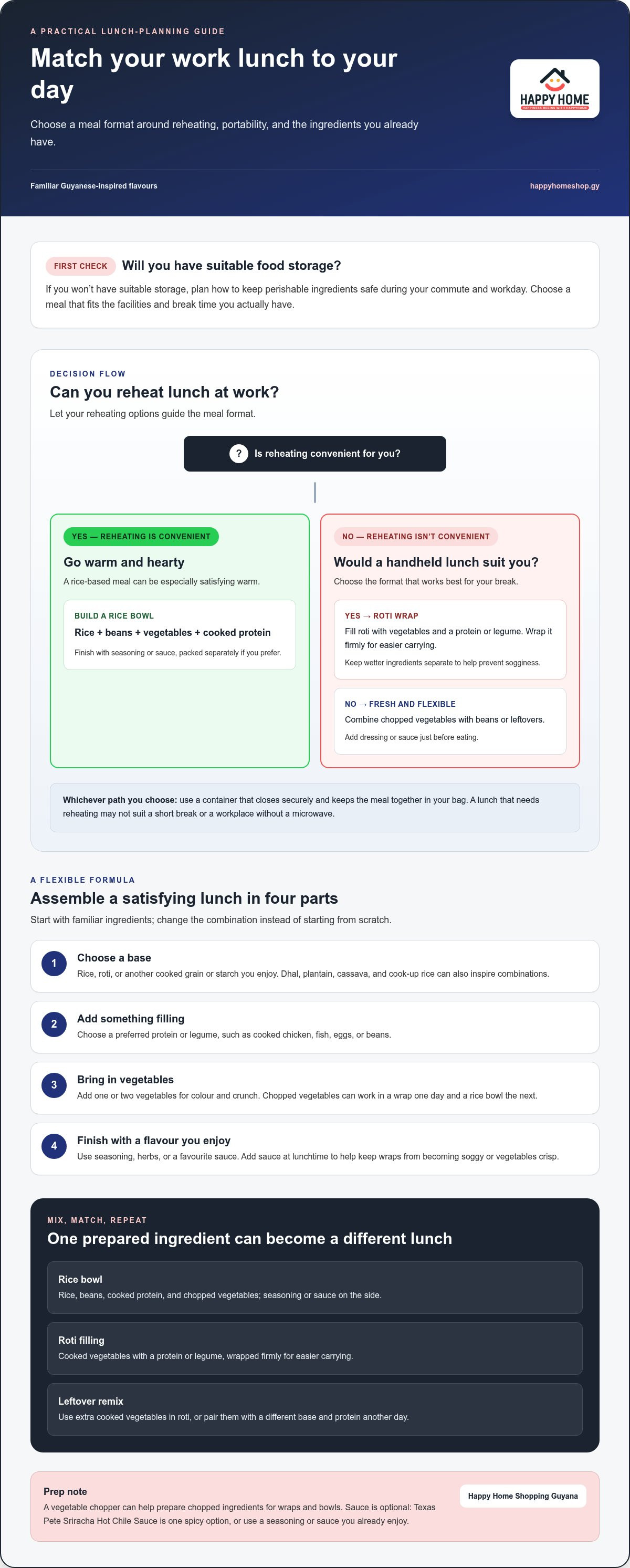
Start with your routine. How much time do you have to prepare lunch, and will you have access to a refrigerator or a way to reheat food at work? A rice-based meal with cooked protein may be especially satisfying warm, while a roti wrap or a vegetable-and-bean combination can be enjoyable without reheating. Choose a container that closes securely and keeps the meal together in your bag.
If you won’t have access to suitable food storage, plan how to keep perishable ingredients safe during your commute and workday. Your facilities matter as much as the recipe: a lunch that needs reheating may not suit a short break or a workplace without a microwave. Pick a format that fits the day you actually have.
Build a flexible lunch from familiar ingredients
Rather than starting with a new recipe, choose a base, add something filling, then bring in vegetables or a sauce for flavour. Rice can pair with beans and cooked protein; roti can wrap vegetables and leftovers; and a vegetable-forward lunch can include beans or another filling addition. Dhal, plantain, cassava, or cook-up rice can provide inspiration, but use what you enjoy and have on hand.
A flavourful sauce can make a familiar combination feel different without extra cooking. Pack it separately or mix it into your meal, adjusting the amount to suit your taste. Texas Pete Sriracha Hot Chile Sauce 18oz adds a spicy option; the lunch works just as well with a sauce or seasoning you already enjoy.
- Warm and hearty: Pack rice with beans, vegetables, and cooked protein when reheating is convenient.
- Easy to hold: Fill roti with vegetables and protein, keeping wetter ingredients separate to help prevent sogginess.
- Fresh and flexible: Combine chopped vegetables with beans or leftovers, and add dressing or sauce just before eating.
Once you know what travels well for your routine, rotate combinations instead of repeating the same lunch. The next sections compare meal formats and show how a few prepared components can simplify planning and packing.
How to assemble a satisfying Guyanese-inspired work lunch
A dependable lunch formula makes it easier to vary meals without following a new recipe each day. Choose a base, add a filling component, include a vegetable or two, then finish with a flavour you enjoy. Adjust the ingredients to suit your appetite, schedule, and what’s already in the kitchen.
Build your lunch from a base, a filling addition, vegetables, and a finishing flavour. This pattern helps you use leftovers thoughtfully and make a meal that feels complete, rather than a collection of random bits.
Choose a base and satisfying additions
Start with a staple that suits the meal and travels well. Rice can anchor a bowl; roti can be folded around a filling; or you can use another cooked grain or starch you already enjoy. Add a preferred protein or legume, such as cooked chicken, fish, eggs, or beans, then include vegetables for colour and crunch. There’s no need to buy ingredients just to follow a formula.
Think about contrast as you assemble. Soft rice or dhal can pair nicely with crisp vegetables, while a roti wrap benefits from a mix of tender and crunchy fillings. For example, combine leftover rice, beans, and chopped vegetables in one lunch, then use the remaining vegetables with an egg or another protein in a roti the next day. Changing the base and combination can make one prepared ingredient feel like a different meal.
Add flavour without making lunch complicated
Seasonings, herbs, or a favourite sauce can bring a fresh finish to familiar ingredients. Pack sauce separately if you want to keep a wrap from becoming soggy or preserve the crunch of vegetables. Add it at lunchtime, adjusting the amount to your taste. Texas Pete Sriracha Hot Chile Sauce 18oz is a way to add heat, but it isn’t essential to the meal.
Try these mix-and-match combinations as starting points, swapping ingredients to suit what you have:
- Rice bowl: Combine rice, beans, cooked protein, and chopped vegetables; finish with seasoning or sauce on the side.
- Roti filling: Pair roti with cooked vegetables and a protein or legume, then wrap it firmly for easier carrying.
- Leftover remix: Turn extra cooked vegetables into a filling for roti, or serve them with a different base and protein the following day.
Keep ingredients that can work in more than one meal in mind as you prepare. Chopped vegetables can add crunch to a wrap one day and round out a rice bowl the next. The Yusshn 12 IN 1 Vegetable Chopper helps prepare chopped ingredients for meals like these. If you’re gathering practical kitchen helpers or flavour additions, browse kitchen tools and sauces at Happy Home Shopping Guyana.
With this flexible approach, easy lunch ideas for work Guyana don’t depend on a perfect plan or a fully stocked pantry. Start with what’s ready, change one or two components, and give the combination a fresh spin.
Compare easy work lunch ideas by prep effort and portability
The right lunch format depends on your morning, commute, and break. A meal that’s quick to pack may need a microwave, while a wrap can be convenient to eat but less suited to very wet fillings. Use this comparison to choose easy lunch ideas for work Guyana that suit your routine, rather than searching for one perfect option.
| Meal format | Prep effort | Portability | Does reheating help? |
|---|---|---|---|
| Rice-based meal with vegetables and a protein or legume | Low if components are already prepared; moderate if cooking from scratch | Good in a sturdy container with a secure lid | Often, if you prefer it warm |
| Roti wrap with a filling | Low to moderate, depending on whether the filling is ready | Good when wrapped snugly; keep wet fillings contained | Usually optional |
| Vegetable-forward combination with beans or another filling addition | Low if vegetables are prepped; moderate if chopping and cooking are needed | Good in a divided or leak-resistant container | Depends on the ingredients and your preference |
Which lunch formats travel well?
Wraps are compact and easy to carry, but a juicy filling can soften the roti before lunch. Pack wetter ingredients or sauces separately, then add them when you’re ready to eat. Rice meals and vegetable combinations are easy to arrange in a container, while separate compartments help keep textures distinct. Choose a sturdy container that fits the meal and closes securely in your bag.
Think about the whole journey, not just the container. If your lunch includes perishable ingredients, plan suitable storage during your commute and workday, and follow current food-safety guidance for handling and storage. A meal that can be stored safely with the facilities you have is more practical than one that depends on facilities you can’t access.
Choose between make-ahead and quick-assembly lunches
Make-ahead components can save time when your schedule is full. You might prepare a base, cook a filling, or wash and chop vegetables ahead, then combine them in different ways. Prepare and store these ingredients safely according to current official food-safety guidance, especially when they include cooked or perishable foods.
Quick assembly may suit you better if you prefer a freshly packed lunch or don’t have time for a larger prep session. Keep suitable ready-to-use ingredients on hand, then assemble the meal shortly before leaving. You can also mix approaches: prepare one component ahead and add fresh items on the day. Pick a routine you can keep up with, and adjust it when your work schedule changes.
Let your facilities guide the final choice. If reheating is easy, a meal you enjoy warm may fit well; if not, choose a format that tastes good without it. Portability, available storage, and your preferences matter more than any single lunch being right for everyone.
Plan and pack work lunches with less weekday effort
A simple routine can take the pressure off weekday mornings without requiring a complete lunch for every workday to be prepared in advance. Start by choosing a few components that combine in different ways, then decide which meals suit your schedule. This keeps the plan flexible: if one day changes, you can still put together a filling lunch from what’s ready.
Create a simple lunch-prep rhythm
Choose ingredients in amounts that make sense for your household, rather than preparing more than you can use. A base, a vegetable, and one or two filling additions can become several different lunches. For example, serve cooked rice with beans one day, then pair it with vegetables and another protein the next. Wash or chop produce and prepare other components ahead only if you can store them safely.
Try this repeatable routine:
- Look at your week. Note which workdays are busiest and whether you’ll have access to food storage or reheating.
- Choose flexible components. Pick a base, a few vegetables, and preferred proteins or legumes that can be combined in more than one way.
- Prepare what saves time. Wash or chop vegetables, or cook a component you can use in several meals, rather than assembling every lunch now.
- Keep a fallback. Set aside ingredients for a quick-assembly lunch, such as roti with a ready-to-use filling, for a day when plans change.
This is a guide, not a strict weekly menu. If plans shift, use the prepared ingredients in another combination or assemble a simple lunch shortly before leaving.
Pack for the workday ahead
Match your container to the food. A wrap may need a snug container to keep its shape, while a meal with separate parts can be easier to manage in a divided container. Pack dressings, sauces, or other wet additions separately when they could soften a wrap or affect the texture of vegetables. Add them just before eating.
Think through the journey and your workplace facilities before packing. For food that needs temperature control, follow current official food-safety advice for preparation, transport, and storage. In Guyana, consult the Food and Drug Department’s current guidance rather than guessing how long food can safely remain out. If suitable storage isn’t available, choose a lunch that fits the conditions you have.
Chopping vegetables ahead can make assembly feel easier. The Yusshn 12 IN 1 Vegetable Chopper is a kitchen helper for preparing chopped ingredients. Explore the vegetable chopper and add it to your lunch-prep routine.
Keep the system easy to repeat: choose a few components, prepare only what you can store safely, and pack each meal for the day ahead. A little flexibility helps your lunch plan work around real life.
Make easy work lunches your own with Happy Home Shopping Guyana
A lunch routine doesn’t need elaborate recipes or a perfectly planned week. Kitchen helpers can make repeatable tasks, such as preparing vegetables, feel more manageable. Once ingredients are ready, combine them in different ways to suit your tastes and workday, using meals you already enjoy as a starting point.
Use practical helpers to make preparation feel easier
Chopped vegetables add colour and crunch to rice bowls, wraps, and other packed meals. The Yusshn 12 IN 1 Vegetable Chopper helps prepare chopped ingredients for everyday cooking. A knife and cutting board work too, so choose the preparation method that feels comfortable in your kitchen.
For a closer look at using this tool as part of meal preparation, explore the 12-in-1 vegetable chopper guide. If you’re thinking more broadly about equipment for everyday cooking, the kitchen gadgets guide for Guyana home cooks offers another starting point. Use these ideas to focus on tools that suit the way you prepare food.
Turn lunch inspiration into an easy next step
Choose one lunch idea from this guide and adapt it for your next workday. Change the base, use vegetables you already have, or add a flavour you enjoy. Keep the first try simple, then notice what travels well and what you’d adjust next time. That feedback can help you build a routine that fits your preferences instead of following a rigid menu.
If you’re setting up your kitchen for everyday cooking, the kitchen supplies guide for home cooking can help you explore practical equipment ideas. The aim is to make preparation more straightforward, whether you use a tool you already own or add a helpful kitchen item.
With a flexible plan and familiar ingredients, easy lunch ideas for work Guyana can feel more achievable from one workday to the next. Pick a meal, make it your own, and build from there. Explore practical kitchen finds at Happy Home Shopping Guyana for tools and food additions that can support your home routine.
Make your next work lunch a fresh start
Your lunch routine can grow with your tastes and changing workdays. Try one new combination next time you pack a meal, then notice what you enjoyed: the flavour, how easy it was to eat, or whether it kept you satisfied through your break. Keep what worked and change just one detail for the next lunch. Small adjustments can help easy lunch ideas for work Guyana feel personal rather than like another rule to follow.
There’s no need to get every detail right on the first try. Let convenience and enjoyment guide your choices, and give yourself room to experiment with familiar ingredients. A practical kitchen tool or a new flavour can offer inspiration when you’re ready to vary your lunch prep.
For useful additions to your home routine, explore practical kitchen finds at Happy Home Shopping Guyana. Choose an idea that suits you, make it your own, and enjoy a more welcoming lunch break.
Frequently Asked Questions
What are some easy lunch ideas for work in Guyana?
Easy lunch ideas for work Guyana can start with leftovers or familiar ingredients you already enjoy. Try a sandwich with cooked chicken and crunchy vegetables, chow mein packed in a secure container, or bread with a filling you can assemble quickly. For variety, change the seasoning or side rather than preparing a completely different meal. Choose options that suit your appetite, taste, and workplace facilities.
Can I pack a work lunch that does not need reheating?
Yes. Pack a roti roll, a sandwich, or a vegetable-and-bean salad for a lunch you can eat without reheating. Keep perishable fillings safely chilled during transport and at work, and choose ingredients you enjoy when served cold or at room temperature. If your workplace has no refrigerator, use an insulated lunch bag with cold packs and follow current food-safety advice for the foods you pack.
How can I keep lunch ingredients from making a wrap soggy?
Keep moisture away from the roti until lunchtime. Pat washed vegetables dry, drain cooked fillings well, and use a thick ingredient such as mashed beans or a firm filling between wetter items and the bread. Pack dressing, chutney, or other sauces in a separate leak-resistant container, then add them just before eating. Wrapping the filled roti snugly can also help it hold together during your commute.
What can I pack for a vegetarian work lunch?
For a vegetarian lunch, pair a base such as rice or roti with beans, dhal, or another legume, then add vegetables and a seasoning you like. You could pack a bean-filled roti with sliced cucumber, or rice with vegetables and dhal in a separate compartment. Check ingredients in sauces and packaged foods if you avoid particular animal products, and follow safe storage guidance for cooked components.
Can I prepare work lunches the night before?
Yes, you can prepare parts of lunch the night before, then store them safely. Wash or chop vegetables, portion dry snacks, or pack a cooked filling separately from bread or roti. Assemble delicate items closer to mealtime if they might soften overnight. Refrigerate perishable ingredients promptly and use current official food-safety guidance for storage and handling. In the morning, take only what you need and keep it properly chilled for the journey.
How should I pack sauce for lunch at work?
Pack sauce in a small, clean, leak-resistant container with a secure lid, separate from roti, bread, or crisp vegetables. Place it upright inside your lunch bag, ideally where it won’t be crushed. Add it just before eating to control the flavour and help preserve texture. For a spicy option, pack Texas Pete Sriracha Hot Chile Sauce separately and add it to taste.
What are quick lunch ideas when I have little time to cook?
Use ready-to-eat or already-prepared components to assemble lunch quickly. Fill bread with leftover cooked protein and vegetables, combine prepared beans with chopped vegetables, or pack leftovers in a container if they suit your workday. Keep a few dependable ingredients on hand so a change of plans doesn’t mean skipping lunch. Handle and store cooked or perishable foods safely, and choose portions that are easy to carry.
How do I keep a packed lunch safe until lunchtime?
Keep perishable foods cool during your commute and workday, using an insulated lunch bag with cold packs if refrigeration isn’t immediately available. Put the lunch in a refrigerator at work when one is available, and avoid leaving it in a warm place. Keep raw foods separate from cooked, ready-to-eat items, and use clean hands and containers. Follow current guidance from Guyana’s Food and Drug Department for specific storage advice.
