

Posted by Happy Home Shopping Guyana
on October 05, 2026

What if a few small changes in your kitchen could help more of your groceries make it onto the plate? Fresh produce can spoil before you get around to using it, especially in Guyana’s warm, humid climate. And when leftovers or ingredients are tucked out of sight, it’s easy to forget they’re there. These food storage tips to reduce waste focus on practical habits, not a cupboard full of special containers.
With a little planning, you can keep food fresh and safe, make what’s in your fridge and pantry easier to see, and use ingredients while they’re still at their best. This guide covers practical ways to organise groceries, choose where different foods belong, store leftovers, and plan meals around what you already have. Start with routines that fit your household, so shopping, cooking, and using up food feel easier day to day.
Key Takeaways
- Use food storage tips to reduce waste by making a simple plan for what you buy, store, and use first.
- Learn how warmth, moisture, air, and handling affect freshness, and distinguish quality changes from possible safety concerns.
- Get a practical guide to choosing the pantry, fridge, or freezer for common foods without relying on one-size-fits-all rules.
- Follow an easy routine for checking supplies, putting groceries away, labelling food, and keeping soon-to-use items visible.
- Adapt storage and meal planning to your household size, shopping habits, and available fridge space in Guyana.
Food Storage Tips to Reduce Waste: Start with a Simple Home System
You open the fridge looking for something to cook and find leftovers pushed behind a jar, or produce in the pantry that’s past its best. A simple home system can help prevent forgotten groceries from becoming waste.
Food-waste prevention means buying, storing, and using food with a plan. Check what you have before shopping, put each item in an appropriate place, and keep food you need to use soon easy to spot. These food storage tips to reduce waste work together: visibility helps you remember what’s available, suitable storage helps preserve freshness, and meal planning gives ingredients a place on the menu.
Why food gets forgotten or spoils before it is used
Buying more than your household can use, hiding leftovers behind newer groceries, and shopping without a rough meal plan can all make food easier to forget. A plan doesn’t need to map every meal. Choose a few dishes and check which ingredients they need to help you shop with purpose.
In Guyana’s warm, humid conditions, food can spoil more quickly if it’s left out or stored in an unsuitable place. Put groceries away promptly and choose storage based on the food, not convenience alone. Food preservation processes offer useful background on how different methods help slow spoilage and preserve food.
A few habits that make food easier to use
Keep the system simple enough to maintain. Group similar foods together, such as breakfast items or ingredients for planned meals. Clear, clean containers can make leftovers easier to identify, but suitable containers you already own can work too. Put food you want to use soon where it’s easy to see, and arrange the fridge and pantry so items aren’t buried.
First-in, first-out means using older suitable items before newer purchases of the same food. When unpacking groceries, move older items to the front and place newer ones behind them. Check dates and condition as you go. Rotation is a reminder to look, not a reason to use food that appears spoiled or may be unsafe.
- Group foods by type or intended meal.
- Make leftovers visible and easy to identify.
- Bring older suitable items forward when putting new groceries away.
You don’t need a perfectly organised kitchen or extra storage products to begin. A quick check before shopping and a few minutes of thoughtful unpacking can make everyday ingredients easier to find and use.
How Food Spoils and How Storage Slows It Down
Food stays fresh longer when you limit its exposure to unsuitable temperatures, excess moisture, air, and rough handling, while following food-specific safety guidance. Storage can slow some changes, but it can’t make spoiled food safe or guarantee that food is safe to eat.
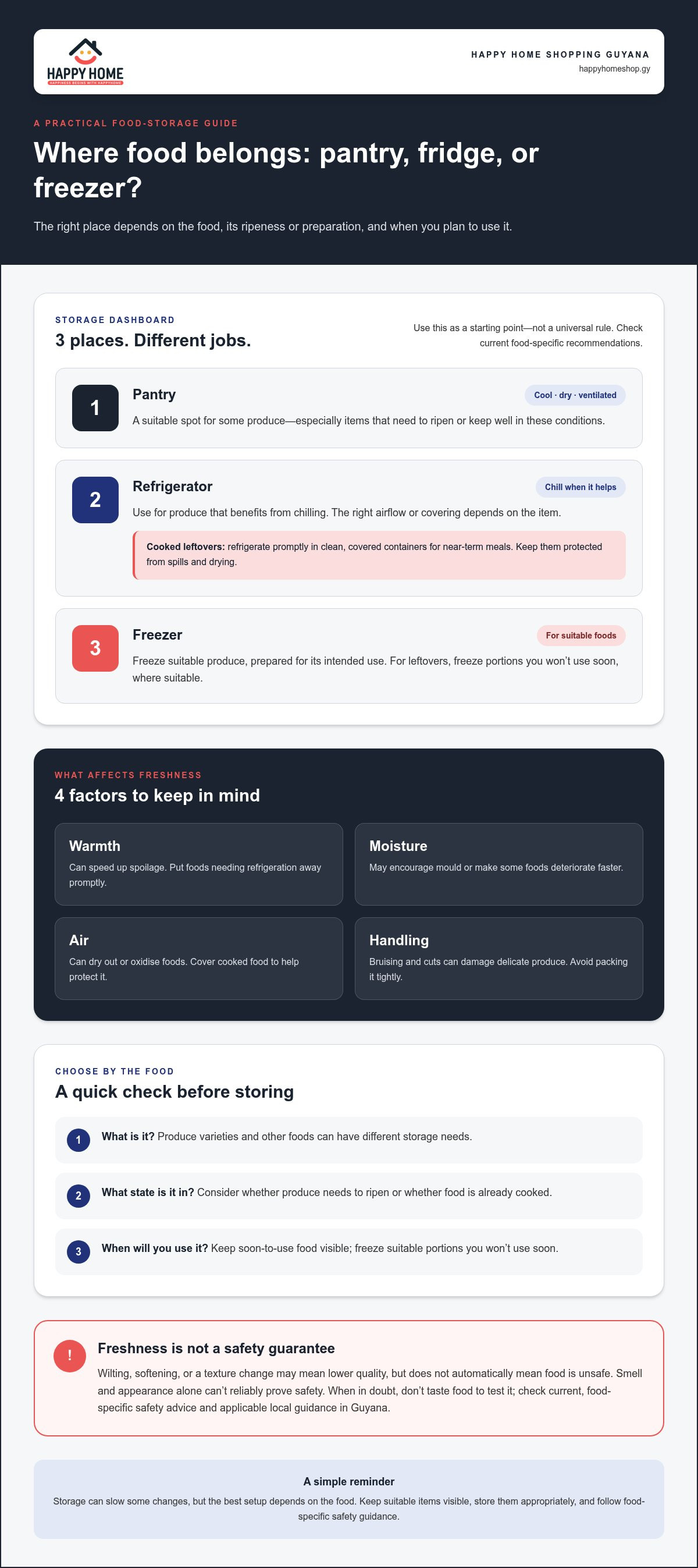
Food changes over time. Warmth can speed up spoilage, while moisture may encourage mould or make some foods deteriorate faster. Air can dry out or oxidise foods, and bruising or cuts from handling can damage delicate produce. The right routine depends on the food: one storage setup won’t suit every fruit, vegetable, leftover, or pantry staple.
Temperature, moisture, and airflow: what matters at home
Put foods that need refrigeration away promptly, rather than leaving them on the counter while you unpack everything else. Cold storage slows the growth of many microbes, but the fridge doesn’t stop food from changing indefinitely. Keep cooked food covered to protect it from spills and drying, and store it according to current food-safety advice.
Produce needs a little more thought. Some items keep better with airflow, while others benefit from being covered to limit moisture loss. Washing produce before storage can leave excess moisture behind, so follow guidance for the specific food and dry it when appropriate. Choose clean containers that suit the item, and avoid packing delicate produce so tightly that it gets crushed. The U.S. Environmental Protection Agency offers practical advice on storing food properly in the fridge, freezer, and pantry.
Use safety guidance rather than guesswork
Wilting, softening, or a change in texture may signal reduced quality, but it doesn’t automatically mean the food is unsafe. On the other hand, smell and appearance alone can’t reliably prove that food is safe to eat. When in doubt, don’t taste food to test it. Check current, food-specific advice from the USDA on leftovers and food safety or the FDA on safe food storage, and follow applicable local guidance in Guyana.
Freshness-preserving tips can help food keep its quality, but they aren’t food-safety guarantees. Use food storage tips to reduce waste alongside careful handling and reliable safety advice, not as a substitute for them. Once you know what you plan to use, simple preparation can make meals easier to put together. For example, a vegetable chopper for meal preparation can help with chopping ingredients before cooking.
Where to Store Common Foods: Fridge, Freezer, or Pantry?
The best place for food depends on what it is, how ripe or prepared it is, and when you plan to use it. This comparison is a starting point, not a universal rule: produce varieties have different needs, so check current food-specific recommendations before deciding where to store them.
| Food category | Pantry | Refrigerator | Freezer |
|---|---|---|---|
| Fresh produce | Some produce keeps well in a cool, dry, ventilated spot, especially when it needs to ripen. | Use for produce that benefits from chilling; airflow or covering depends on the item. | Freeze suitable produce for later cooking, prepared in a way that suits its intended use. |
| Cooked leftovers | Not for extended storage at room temperature. | Refrigerate promptly in clean, covered containers for near-term meals. | Freeze portions you won’t use soon, where suitable. |
| Bread | Keep covered in a dry place if you’ll use it soon. | Refrigeration may change its texture, so choose based on how quickly you’ll eat it and local conditions. | Freeze portions for longer storage, then thaw what you need. |
| Dry pantry goods | Store sealed in a clean, dry place to limit exposure to moisture and pests. | Usually unnecessary unless the product label or specific guidance recommends it. | Only if appropriate for the food and its packaging. |
For produce, avoid assuming that every fruit and vegetable belongs in the fridge. Separate foods with different temperature, moisture, and airflow needs, and check guidance for the specific item. Some produce may be better stored with ventilation, while other items benefit from being covered to reduce drying. The University of Nebraska-Lincoln explains several factors that affect food spoilage, including air and microorganisms, which helps explain why storage conditions matter.
Make leftovers and freezer portions easy to use
For cooked leftovers, follow current food-safety recommendations for prompt cooling, refrigeration, and reheating. Divide suitable foods into smaller portions before freezing so you can thaw only what a meal requires. Use clean, freezer-suitable containers or packaging, and leave room where needed for food to expand.
Label each container with its contents and the date it was stored. A brief label such as “vegetable soup” is more helpful than an unmarked container, and the date makes it easier to plan what to use first. Clear labels and sensible portions turn the freezer into a useful part of your food storage tips to reduce waste, rather than a place where meals disappear from view.
Keep dry goods away from damp areas, close packages securely, and use sealed containers when appropriate. Choose storage based on the food and its label, not on a one-rule-fits-all chart. That small check can help protect quality and make ingredients easier to find when it’s time to cook.
A Step-by-Step Food Storage Routine to Reduce Waste
A repeatable routine makes groceries easier to find and use, even on a busy week. Start with a quick check before shopping, then give new purchases a clear place as soon as they come home.
- Check what you already have. Look through the fridge, freezer, and pantry before making a shopping list. Note ingredients that need using soon, leftovers already prepared, and staples you don’t need to replace.
- Plan a few meals around those foods. Match ripe produce or leftover ingredients with simple meals for the coming days. Leave room for flexible dishes, such as soup, a stir-fry, or a cooked vegetable side, rather than planning every meal in detail.
- Group groceries by storage needs. As you unpack, separate items that belong in the pantry, refrigerator, or freezer. Check product labels and food-specific guidance, since storage needs can vary by item.
- Put food away promptly. Store foods that require refrigeration or freezing as soon as practical. Transfer only suitable items into clean, appropriate containers, and keep dry goods sealed in a dry place.
- Rotate and label. Move older suitable items to the front and place newer purchases behind them. Label leftovers and freezer portions with their contents and storage date, so they’re easier to identify and plan around.
- Make soon-to-use food visible. Keep the ingredients and leftovers you intend to use next in a clear, easy-to-see spot. This small cue can help bring them to mind when you’re deciding what to cook.
Build a regular check into meal planning
Choose a regular moment, such as before writing the next shopping list, to scan the fridge and pantry. Check what’s ripe, what leftovers are waiting, and what needs using soon. Then add one or two of those items to upcoming meals. If produce is suitable but you can’t use it right away, consider preparing and freezing it according to food-specific guidance. Use food scraps only when they’re suitable for the recipe and have been handled safely.
Preparation can make planned meals easier to pull together. A vegetable chopper is a useful aid for preparing ingredients; for more ideas, see Mastering Meal Prep: 12-in-1 Vegetable Chopper in Guyana. The Yusshn 12 IN 1 Vegetable Chopper supports meal preparation, while storage decisions still depend on the food itself.
Keep the routine manageable. You don’t need to reorganise the whole kitchen every week; a short check, thoughtful unpacking, and visible placement can make food storage tips to reduce waste easier to follow. Explore kitchen tools for easier meal preparation.
Make Food Storage Work for Your Household in Guyana
A useful storage routine should fit the way your household shops, cooks, and uses its fridge. A smaller household may find it easier to buy produce in quantities it can use before the next shop, while a larger household may plan around family meals and divide ingredients for different dishes. If shopping trips are less frequent, plan which foods need using first and make good use of safe freezer storage. Let your fridge space guide your choices too. Buying more than you can store properly makes it harder to keep food organised.
Adapt habits to your home and climate
Guyana’s warm, humid conditions make it sensible to put foods that need chilling away promptly rather than leaving them out while you cook or unpack. Keep only what you need for preparation or serving at room temperature, then return perishable items to suitable storage. Humidity also makes it important to keep dry goods in a clean, dry place and close packages securely.
Households differ, so build a routine around your usual shopping pattern. If you shop often, smaller planned quantities may suit your week; if you shop less frequently, make a short list of foods to use early and plan meals around them. Follow current authoritative food-safety guidance for refrigeration, leftovers, and reheating. Storage habits help preserve food, but they don’t replace safe handling or food-specific advice.
Use tools to make planned meals easier
Preparing vegetables ahead can make it simpler to follow through on a meal plan, especially after a busy day. Wash and prepare produce in a way that suits the specific food, then store it appropriately and use it within a suitable timeframe. A vegetable chopper can help with preparation, but it isn’t a storage product and can’t replace prompt, safe storage. For more ideas, explore the Guide to Kitchen Supplies Online in Guyana for practical kitchen-tool inspiration.
Keep the routine flexible. If fridge space is limited, prioritise foods that need refrigeration and avoid filling it with ingredients you won’t use soon. If you’re cooking for fewer people, divide suitable leftovers into portions that make sense for later meals. These small adjustments make food storage tips to reduce waste feel manageable in a real household, rather than like another complicated chore.
Choose kitchen helpers that support the way you cook and prepare meals at home. Explore practical kitchen tools for simple ways to make everyday meal preparation easier.
Make a Few Small Kitchen Habits Count
Reducing food waste doesn’t require a perfect pantry or a complicated plan. Start by checking what you have before shopping, storing each food appropriately, and keeping items you need to use soon in sight. A quick weekly fridge and pantry check can help turn ripe produce and leftovers into meals before they’re forgotten.
These food storage tips to reduce waste work best when they suit your household’s size, shopping rhythm, and available fridge space. Follow current food-safety guidance, especially for refrigeration and leftovers, and choose meal-preparation helpers only when they make your routine easier. The Yusshn 12 IN 1 Vegetable Chopper, for example, can support vegetable preparation, while safe storage remains essential.
Happy Home Shopping Guyana serves households across Guyana through online retail, with practical kitchen tools to help make everyday cooking more manageable. Explore practical kitchen tools, then choose one simple habit to put into practice this week. Small, steady changes can help more of the food you buy find its way to the table.
Frequently Asked Questions
How can I store food to reduce waste?
Start by checking your fridge, freezer, and pantry before shopping, then store each food according to its needs. Label leftovers and freezer portions, and place older suitable items where you can see them. Plan meals around ingredients that need using soon, such as ripe produce or cooked food. A quick weekly check can help you spot these items before they’re forgotten and make food storage tips to reduce waste easier to follow.
Should I store all fruits and vegetables in the refrigerator?
No, produce storage depends on the type of fruit or vegetable, its ripeness, and its condition. Some items benefit from refrigeration, while others may need a different temperature or better airflow. Avoid treating all produce the same way. Check current, food-specific storage guidance, and keep items with different needs separate where practical. This can help maintain quality without assuming the fridge is always the best place.
Can I freeze leftovers to prevent food waste?
Yes, freezing can help preserve suitable leftovers when they’re handled and stored safely. Divide food into portions that suit future meals, place them in appropriate freezer-safe containers, and label each with its contents and date. Follow current food-safety guidance for cooling food before freezing, as well as for thawing and reheating. Freezing helps make leftovers available later, but it doesn’t replace safe handling or make food safe if it was mishandled.
How should I organise my fridge so food does not get forgotten?
Group similar foods together, keep items you plan to use soon visible, and place older suitable groceries in front of newer ones. Clear containers and labels can help you identify leftovers quickly. Do a brief fridge check before shopping or planning meals, so you can use what’s already there. Follow food-specific storage advice, too, since not every fridge shelf has the same temperature or suits every food.
What happens if food is left out in warm weather?
Warm conditions can make safe handling especially important for foods that need refrigeration, as warmth can encourage microbes to grow. Put perishable food away promptly and don’t rely on smell or appearance alone to decide whether it’s safe. Recommended time and temperature guidance varies by food and conditions, so follow current authoritative food-safety advice, including guidance applicable in Guyana. Avoid using a universal time limit unless a reliable source supports it.
How can meal planning help reduce food waste?
Meal planning helps you use food already at home and avoid buying ingredients you don’t need. Check the fridge, freezer, and pantry before writing your shopping list, then plan a few flexible meals around ingredients that should be used soon. Decide how leftovers can fit into another meal, too. Keep the plan realistic for your household’s schedule, so it’s easy to follow and doesn’t become another chore.
