

Posted by Happy Home Shopping Guyana
on August 19, 2026

What if you could reclaim your Sunday afternoons and slash your food budget without giving up the rich flavors of a homemade cook-up rice or pepperpot? Learning how to meal prep for the week in Guyana is the secret to avoiding that exhausted feeling when you come home to find the bora wilting in the heat. Most of us have settled for an expensive $2,500 GYD takeaway meal because we're too tired to cook. It's frustrating to see fresh produce go to waste while your wallet takes a hit from daily fast food runs.
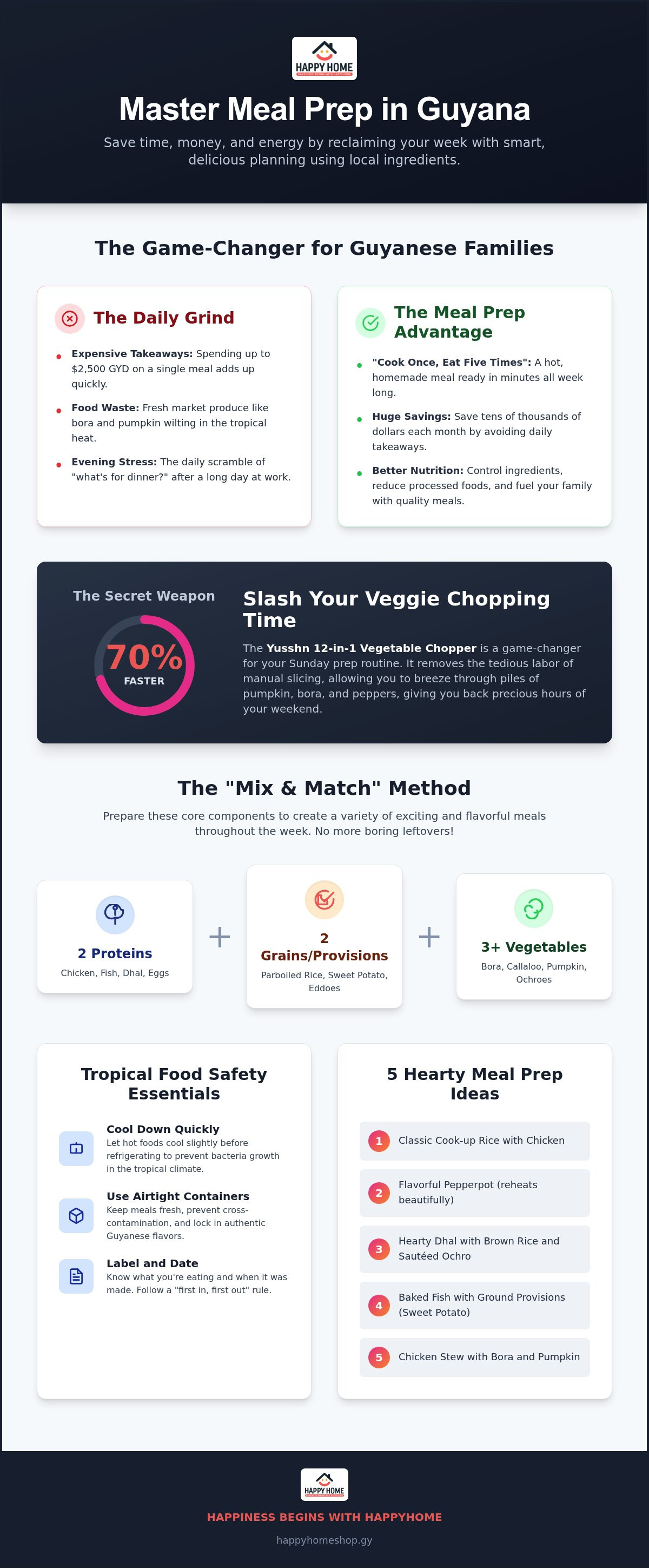
This guide shows you how to save time and money by using vibrant local ingredients and smart kitchen essentials that do the heavy lifting for you. Discover a step-by-step routine to organize your kitchen, use tools like the Yusshn 12-in-1 Vegetable Chopper to cut prep time by 70 percent, and keep your meals tasting bold all week long. We'll even share how a splash of Texas Pete Sriracha or a morning Jade Leaf Matcha can keep your energy and flavors high as you master your new routine. Whether you're feeding a busy family or looking to eat healthier, these practical solutions make home life a little more joyful and a lot more delicious.
Key Takeaways
- Save significant money and energy by adopting a "cook once, eat five times" routine that keeps you away from expensive daily takeaway.
- Learn how to meal prep for the week in Guyana by combining fresh market finds like bora and pumpkin with a simple mix-and-match grain and protein strategy.
- Use the Yusshn 12-in-1 Vegetable Chopper to breeze through your Sunday prep and reduce your vegetable chopping time by up to 70 percent.
- Protect your family with vital food safety tips designed for the tropical climate, ensuring your prepped meals stay fresh and delicious in the refrigerator.
- Explore five hearty, traditional meal ideas that reheat beautifully while maintaining the authentic Guyanese flavors your family loves.
Why Meal Prepping is a Game-Changer for Guyanese Families
Imagine coming home after a long day and having a hot, nutritious meal ready in minutes. This is the beauty of the "Cook Once, Eat Five Times" method. By dedicating a few hours on a Sunday to batch-cooking your favorite stews or grains, you ensure your family enjoys the diverse flavors of Guyanese cuisine throughout the busy work week. It's about shifting from the daily stress of "what's for dinner" to the comfort of a pre-stocked fridge. You'll find that the evening rush becomes a time for connection rather than a scramble to the stove.
Learning how to meal prep for the week in Guyana helps you take back control of your health and your wallet. When you cook at home, you decide exactly how much oil goes into your cook-up rice and how much salt is added to your stews. With local food prices having increased by over 75 percent in recent years, every meal prepared at home is a victory for your savings. Avoiding the GYD 2,484 cost of a simple budget restaurant meal can save a family tens of thousands of dollars each month. It's a simple way to protect your budget while feeding your family the high-quality food they deserve.
Saving Time and Money at the Local Market
Shopping for fresh produce becomes much more efficient when you have a plan. Buying your bora, pumpkin, or peppers in larger quantities often results in better deals at the market. Prepping these items immediately prevents the common frustration of watching fresh greens wilt in the tropical heat. Meal prepping is a deliberate strategy for managing both your physical health and your household budget through organized cooking and storage. Using every part of your market haul reduces waste and ensures you're getting the most value from seasonal harvests. You'll spend less time wandering the aisles and more time enjoying your home.
Creating a 'Happy Home' Through Better Nutrition
A well-organized kitchen is the heart of a joyful home. When the fridge is filled with ready-to-eat meals, the evening atmosphere changes from frantic to relaxed. This consistency helps busy professionals maintain high energy levels without relying on heavy, processed snacks. Tools like the Yusshn 12-in-1 Vegetable Chopper make the preparation process itself more enjoyable by removing the tedious labor of manual slicing. Adding a morning boost of Jade Leaf Matcha or a dash of Texas Pete Sriracha to your prepped proteins keeps your routine exciting and your energy steady. Knowing how to meal prep for the week in Guyana is truly a gift of time and well-being for your entire household. It creates a supportive environment where everyone can thrive.
Smart Planning: Combining Market Finds with Pantry Essentials
Successful prepping isn't about eating the same exact meal five days in a row. It's about building a versatile foundation that allows you to swap flavors and textures throughout the week. The "Mix and Match" method is particularly effective for our local lifestyle. By preparing two proteins, two grains, and three vegetables, you can create various combinations that keep your palate excited. When you master how to meal prep for the week in Guyana, you realize that variety is the key to staying motivated and avoiding the temptation of expensive street food.
Before you head to the market, perform a quick inventory check of your kitchen. Ensure you have enough airtight containers to hold your portions and verify that your pantry is stocked with essential oils and spices. Following guidance from the Guyana Food Safety Authority regarding the handling of fresh produce ensures that your market haul remains safe for consumption. Having a clear plan prevents overbuying and helps you focus on high-quality ingredients that last.
The Guyanese Meal Prep Shopping List
Focus your shopping list on hearty, local staples that stand up well to reheating. These items provide the best value and nutrition for your family:
- Vegetables: Select fresh bora, callaloo, pumpkin, boulanger, and ochroes. These are versatile and packed with vitamins.
- Proteins: Chicken and fish are excellent lean options, while dhal and eggs serve as affordable, high-protein bases for any meal.
- Grains and Provisions: Stock up on parboiled rice or brown rice. Include ground provisions like sweet potato and eddoes for sustained energy.
The Essential 'Flavour Pantry'
A well-stocked pantry prevents mid-week boredom by allowing you to transform the same base ingredients into different culinary experiences. Keep a bottle of Texas Pete Sriracha on hand to add a quick, spicy kick to your chicken or fish dishes. For the cook who needs a steady boost of focus during a long prep session, Jade Leaf Matcha Organic Matcha Latte Mix provides clean energy without the typical coffee crash. You can find these specialty ingredients and more at Happy Home Shopping Guyana to elevate your daily routine. By stocking up on dry goods and long-lasting condiments, you'll spend less time on emergency market runs and more time enjoying the peace of a prepared home.
The Prep Day Execution: Saving Hours with the Right Tools
Your prep day shouldn't feel like a second job. By setting aside a dedicated two to three hour window, usually on a Sunday afternoon, you can set your entire week up for success. This focused time allows you to move methodically through your kitchen without the pressure of a ticking clock. To make the process even smoother, adopt the "clean as you go" rule. By washing your bowls and utensils while your stew simmers or your rice boils, you prevent that overwhelming pile of dishes at the end of the session. Keeping your workspace tidy fosters a sense of domestic joy and makes the whole experience much more pleasant.
Efficiency is about multi-tasking on the stove. While your ground provisions are boiling in one pot, you can have your stewed chicken or dhal bubbling on another burner. By following the structure of a Caribbean meal planning guide, you ensure your batch-cooking covers all necessary food groups without wasting energy. If you find your stamina dipping during this busy window, a refreshing cup of Jade Leaf Matcha can provide the clean energy boost you need to finish strong. The goal is to work smarter, not harder, so you can spend your evenings relaxing with your family instead of standing over a hot stove.
Step-by-Step Prep Workflow
Having a clear order of operations is the secret to how to meal prep for the week in Guyana without feeling scattered. Follow this simple workflow to maximize your time:
- 1. Wash and dry produce: Clean all your vegetables immediately to prevent mould and keep your fridge organized.
- 2. Use a vegetable chopper: Dice your onions, peppers, and garlic in seconds rather than minutes.
- 3. Batch-cook staples: Prepare your large pots of grains and proteins simultaneously.
- 4. Portion thoughtfully: Move your meals into containers while they are still warm, but let them cool slightly before snapping the lids shut to avoid excess moisture.
Mastering the Vegetable Chopper for Local Produce
The Yusshn 12-in-1 Vegetable Chopper is truly a secret weapon for the Guyanese kitchen. It reduces chopping time by up to 70 percent, which is a massive help when you're dealing with large bunches of bora or multiple onions. You can use the smaller dicing blades for onions and garlic to avoid the usual tears, while the larger slicing blades are perfect for cucumbers or boulanger. For more tips on getting the most out of this tool, check out our guide on Mastering Meal Prep with the 12-in-1 Vegetable Chopper. Using the right tools transforms a tedious chore into a fast, satisfying part of your weekly routine.
Tropical Food Safety: How to Store Your Prep for Freshness
Guyana's tropical heat and high humidity present unique challenges for keeping food fresh. The "Danger Zone" refers to the temperature range where bacteria grow most rapidly, typically between 40 and 140 degrees Fahrenheit. In our climate, leaving a pot of cook-up rice or stew on the counter for too long can lead to quick spoilage. Understanding how to meal prep for the week in Guyana means prioritizing immediate cooling and proper storage to keep your family safe and your meals delicious. High-quality, airtight containers are your best defense against the moisture that often leads to mold in tropical environments.
Choosing the right storage is a simple way to improve your kitchen routine. Glass containers are excellent because they don't hold onto odors or stains from heavy stews, while BPA-free plastic options are lightweight and perfect for taking lunch to work. Follow the "4-day rule" for the best results: keep what you'll eat within four days in the refrigerator and move the rest to the freezer. When it's time to eat, you can revive your food by adding a tiny splash of water before reheating. This simple trick creates steam that helps your rice or provisions taste "just cooked" again.
Cooling and Storage Techniques
Never put steaming hot food directly into a cold refrigerator. This raises the internal temperature of the fridge and puts your other groceries at risk. Instead, divide large portions into smaller, shallow containers so they cool faster. Allowing your meals to reach a safe room temperature before sealing prevents condensation and keeps your prepped vegetables from becoming soggy. Organize your fridge to allow for plenty of airflow around your containers to ensure consistent cooling. Labeling each lid with a date helps you stay organized and ensures you always eat the oldest prep first, reducing food waste and saving you money.
Preventing 'Meal Prep Boredom'
Eating the same thing every day can feel repetitive, but a few smart strategies can keep your taste buds happy. Use a "sauce strategy" by keeping condiments like Texas Pete Sriracha separate until you're ready to serve. This maintains the texture of your proteins and lets you adjust the heat level daily. If you find yourself with extra dhal or stews, freeze them in individual portions for the following week to create a rotation of variety. You can find high-quality storage solutions and pantry essentials by visiting Happy Home Shopping Guyana to upgrade your kitchen setup. By mixing and matching your frozen reserves with fresh prep, you'll always have something exciting waiting for you at mealtime.
5 Simple Guyanese Meal Prep Ideas to Start This Week
Putting your new skills into practice is the most rewarding part of the process. When you understand how to meal prep for the week in Guyana, you can turn a single Sunday afternoon into a week of culinary variety. These five ideas blend our beloved traditional flavors with modern convenience to ensure your family never feels like they're eating "leftovers." Each meal is designed to stay fresh in our climate and reheat beautifully for a quick lunch or dinner.
- Stewed Chicken with Parboiled Rice and Steamed Bora: This is a sturdy classic. The chicken stays moist in its gravy, while parboiled rice maintains a great texture after reheating.
- Dhal and Rice with Fried Fish and Roasted Pumpkin: Dhal is an excellent prep item because it actually tastes better the next day. Pair it with firm fried fish and sweet roasted pumpkin for a balanced, comforting meal.
- Boiled and Fried Ground Provisions with Saltfish and Peppers: Use your vegetable chopper to quickly dice the peppers and onions for the saltfish. Provisions like eddoes and sweet potatoes are incredibly filling and provide steady energy.
- Sriracha-Glazed Baked Chicken with Quinoa and Callaloo: For a modern twist, brush your chicken with Texas Pete Sriracha before baking. Serve it with quinoa and steamed callaloo for a high-protein, nutrient-dense option.
- Matcha-Infused Overnight Oats: Don't forget breakfast. Mix oats with milk, a touch of honey, and Jade Leaf Matcha for a cooling, caffeinated start to your morning that requires zero cooking.
Customizing Your Meals
Flexibility is the secret to a sustainable routine. If the fish at the market looks better than the chicken, make the swap. You can also use any leftover "cut-up" vegetables from your prep session to toss together a quick mid-week stir-fry. This prevents waste and keeps your menu feeling fresh. For more creative ways to use your pantry staples in the morning, explore The Ultimate Guide to Jade Leaf Matcha for perfect breakfast prep ideas. Adapting your plan to what's seasonal and fresh ensures you're always getting the best value for your household budget.
Final Tips for Success
Start small so you don't feel overwhelmed. Try prepping just three days of lunches at first to get a feel for the rhythm. As you become more comfortable with how to meal prep for the week in Guyana, you can expand to full work weeks or even weekend breakfasts. Investing in quality tools like the 12-in-1 vegetable chopper makes the process feel less like a chore and more like a gift to your future self. Remember that a happy home truly starts with a well-fed family and a relaxed, organized kitchen. You've got this!
Embrace the Joy of a Stress-Free Kitchen
Reclaiming your time and energy starts with a single Sunday afternoon. You've discovered how to blend fresh market produce with smart storage techniques to keep your meals vibrant and safe in our tropical climate. By following this simple guide, you'll significantly reduce food waste and save your hard-earned money while ensuring your family enjoys authentic local flavors every day. Mastering how to meal prep for the week in Guyana is a wonderful way to bring peace and domestic joy back to your busy evenings.
We're dedicated to helping you create a better living environment with practical, high-quality solutions. Shop the 12-in-1 Vegetable Chopper and start your meal prep journey today! We offer fast national delivery across Guyana along with highly-rated kitchen tools and curated specialty foods that make every prep session a breeze. Your path to a more relaxed lifestyle is just one market trip and a few smart tools away. We're excited to see you transform your kitchen into a hub of health and happiness.
Frequently Asked Questions
How long does cooked Guyanese food last in the fridge?
Most cooked Guyanese dishes like stews and dhal last for 3 to 4 days in a standard refrigerator. It's important to keep your fridge temperature below 40 degrees Fahrenheit to prevent bacterial growth. If you've prepared a large batch of pepperpot or curry, consider freezing portions you won't eat within that window. This ensures your hard work stays fresh and safe for your family to enjoy later in the week.
Can I meal prep if I don't have a lot of Tupperware?
You don't need a massive collection of matching containers to start. Use what you have, such as cleaned glass jars for sauces or dhal and sturdy bowls covered with reusable wraps. As you learn how to meal prep for the week in Guyana, you can slowly invest in a few high-quality, airtight glass containers. These are perfect for keeping your bora and pumpkin crisp while preventing odors from spreading in your refrigerator.
Is it safe to reheat rice multiple times?
It is generally recommended to reheat rice only once to ensure maximum food safety. Rice can harbor spores that survive the initial cooking process and multiply if the rice is left at room temperature. To stay safe, portion your rice into individual servings before refrigerating. When you're ready for lunch, reheat only the amount you plan to eat immediately. This simple habit keeps your meals safe and your family healthy.
What are the best local vegetables that don't get soggy when prepped?
Hearty vegetables like bora, pumpkin, and boulanger are excellent choices because they maintain their texture well after reheating. These local staples stand up to the prep process better than delicate leafy greens. For the best results, steam your bora until it's just tender rather than overcooking it during the initial prep. Using a tool like the Yusshn 12-in-1 Vegetable Chopper ensures uniform pieces that cook evenly and stay delicious all week.
How much money can I actually save by meal prepping in Guyana?
You can save thousands of dollars each month by avoiding the high cost of daily takeaway. With a budget restaurant meal costing around GYD 2,484, eating out every workday quickly drains your household budget. Prepping at home allows you to buy seasonal produce in bulk and use every part of your market haul. This strategy helps you manage your finances more effectively while providing your family with nutritious, home-cooked meals every day.
Do I need to cook everything on Sunday, or can I prep in stages?
You can certainly prep in stages if a single three-hour session feels overwhelming. Some families prefer to wash and chop all their vegetables on Sunday using their 12-in-1 vegetable chopper but wait to cook their proteins on Monday or Tuesday. Comfortably managing how to meal prep for the week in Guyana involves finding a rhythm that fits your specific schedule. This "buffet style" prep keeps your ingredients fresh and allows for more flexibility.
How do I stop my chicken from getting dry when reheating?
The best way to keep chicken moist is to reheat it with a little bit of extra moisture. Add a teaspoon of water or a splash of gravy to your container before placing it in the microwave. Covering the dish with a damp paper towel also helps create steam, which prevents the meat from becoming tough. This simple trick ensures your stewed or baked chicken tastes just as juicy as the day you cooked it.
Can I prep traditional 'Cook-up Rice' for the whole week?
Cook-up rice is a fantastic candidate for meal prepping because the flavors often deepen after a day or two. However, since it contains coconut milk and various meats, it's best to consume it within 3 days if kept in the fridge. For a full week of meals, freeze half of the pot immediately after it cools. This keeps the rice from spoiling and provides a quick, delicious meal for the following weekend.
