

Posted by Happy Home Shopping Guyana
on October 28, 2026

A sauce’s thickness can matter as much as its heat. For sriracha sauce for cooking, simmer it for 5 to 10 minutes to reach the consistency you want: keep it loose enough to coat fried rice or noodles, or cook it until it clings more readily to other ingredients. Homemade sauce brings a different trade-off, because ingredient costs and preparation time matter alongside how much you make.
It’s natural to wonder whether making sriracha at home costs less than buying a bottle. Compare the ingredients and preparation time with the convenience of ready-to-use sauce rather than assuming one option is always cheaper. This guide covers using sriracha in stir-fries, fried rice and noodles, how to distribute it evenly, and what to consider when comparing homemade and bottled sauce costs in Guyana.
Key Takeaways
- Adjust the sauce’s thickness to suit the dish, and use a small amount first so its texture and heat don’t overpower the meal.
- Build flavour in stir-fries, fried rice and noodles by mixing the sauce through evenly and tasting as you cook.
- Compare homemade and bottled options by weighing ingredient use and preparation against the convenience of ready-to-use sauce.
- For a fair cost comparison, consider how much sauce each option yields and how often you’ll use it.
Sauce thickness and consistency
For a thicker homemade sauce, simmer it for 5 to 10 minutes, stirring as it cooks. The exact texture depends on how much moisture evaporates, so watch the sauce rather than relying only on the clock. If you need a substitute, use another chilli sauce or combine chilli paste with vinegar; adjust the amount to balance heat and tang. You can cook sriracha into a dish or stir it in near the end. Earlier addition blends its flavour through the food, while a final stir gives a brighter, more distinct kick.
- Choose the texture for the dish. Use a thinner consistency when you want sauce to spread through rice or coat noodles lightly. For a glaze or dipping condiment, cook until it clings to a spoon. A thicker sauce can bring concentrated chilli, garlic, sugar, salt and distilled vinegar flavour, so add it gradually.
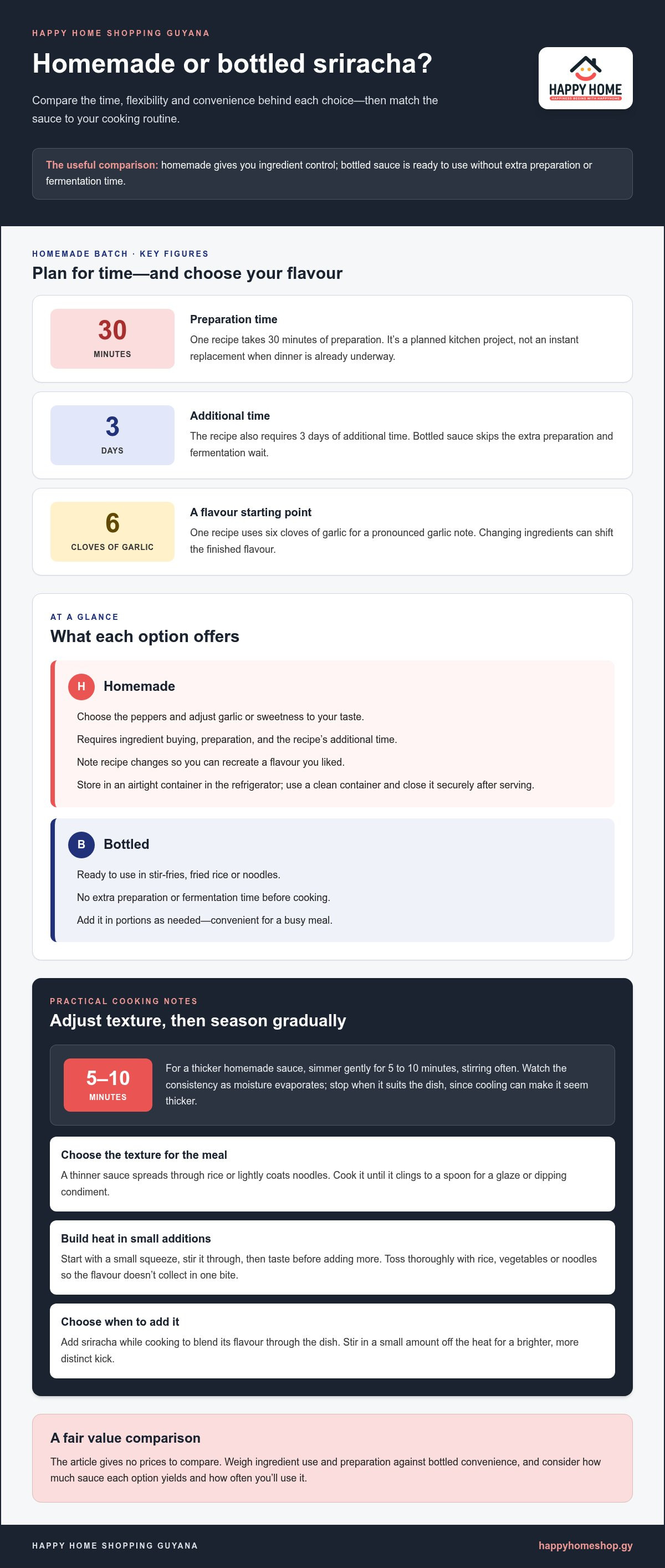
- Thicken it gently. Pour the sauce into a small pan and bring it to a gentle simmer. Cook for 5 to 10 minutes, stirring often so the base doesn't stick. Check the consistency as it cooks; stop once it suits your recipe, since cooling can make it seem thicker.
- Rewarm thickened sauce with care. Place the amount you need in a small pan over low heat, then stir until it loosens. If it remains too thick to mix into fried rice, add a little water or vinegar and stir again. Add liquid gradually, so the sauce doesn't become runny or lose its punch.
- Mix it into food at the right stage. Add sriracha while cooking when you want its flavour distributed through the dish, such as a stir-fry. For a sharper finish, take the pan off the heat and stir in a small amount before serving. Taste after mixing, then add more only if needed.
- Warm leftovers evenly. Reheat a refrigerated portion in a pan over low heat, stirring to loosen the sauce without scorching it. If you're adding it to a cooked meal, warm the sauce with the food rather than heating a large amount alone.
Using sriracha in stir-fries, fried rice and noodles
Use sriracha sauce for cooking as a flexible seasoning for noodles, fried rice and stir-fries. Add it gradually, then taste before adding more.
-
Choosing How Much Sriracha to Add
Start with a small squeeze, stir it into the dish, then taste before adding more. The amount depends on the portion size, the sauce’s heat and your preferred spice level. For fried rice, mix it with the rice and vegetables. For noodles, toss thoroughly so the flavour spreads evenly instead of collecting in one bite.
For a shared meal, keep the main dish milder and serve extra sauce at the table. Avoid pouring it straight from the bottle over the whole pan, as it can be difficult to distribute evenly or tone down an overly spicy dish. Gradual seasoning lets everyone adjust their portion.
-
Pairing Sriracha With Other Ingredients
Pair sriracha with garlic, fresh pepper, vegetables, rice, noodles or a savoury stir-fry sauce. Garlic complements its aromatic notes, while vegetables and plain rice carry the chilli flavour throughout the meal.
Try adding sriracha and garlic as the vegetables cook, then toss in noodles or rice. Taste before adding salty sauces, since several strong seasonings can overpower the other ingredients. For sriracha sauce for cooking, balance the chilli with mild ingredients rather than adding more heat by default.
- Season a stir-fry in the pan. Cook the vegetables and other ingredients first, then stir sriracha into the sauce or seasoning. Toss until everything is coated. Taste before serving, especially if you’ve also added garlic, pepper or another spicy ingredient. A small amount can bring the flavours together without masking the vegetables.
- Spread flavour through fried rice. Add sriracha as you toss the rice with vegetables so it blends across the grains. Break up clumps while stirring, then taste a spoonful from the centre of the pan. If the heat is uneven, mix again before serving.
- Toss noodles thoroughly. Stir sriracha into drained noodles, or blend it with your chosen sauce first. Coat the strands evenly, then taste before adding more. This helps prevent a concentrated patch of chilli from masking the noodles, garlic or vegetables.
Homemade versus bottled sriracha
Choose between homemade sauce and a ready-made bottle by weighing preparation time, control and convenience. Each option suits a different cooking routine.
- Set aside time for a homemade batch. One recipe takes 30 minutes of preparation, plus 3 days of additional time. That makes homemade sauce a planned kitchen project, rather than a quick replacement when dinner is already underway. A recipe with six cloves of garlic gives you a starting point for a pronounced garlic note; changing ingredients can shift the finished flavour.
- Make homemade sauce when you want control. Preparing it yourself lets you choose the peppers and adjust the garlic or sweetness to your taste. Follow the same recipe and note any changes, so you can recreate the heat and flavour you liked in your next batch.
- Choose bottled sauce for everyday convenience. A prepared bottle is ready for stir-fries, fried rice or noodles, without extra preparation or fermentation time. You can also add it in portions as needed. Bottled sauce saves preparation for a busy meal, while homemade sauce suits cooks who enjoy controlling the ingredients.
- Plan storage before making extra. Store homemade sauce in an airtight container in the refrigerator. Use a clean container and close it securely after serving. Consider how often you cook with chilli sauce before making a larger batch; a bottle or homemade container is most useful when it fits your regular meals.
- Compare value by use, not just preparation. Homemade sauce requires buying and preparing ingredients, while bottled sauce is ready to use. Consider whether you’ll use a batch across several meals, whether you want to customise the recipe and how much time your routine allows. These practical factors can help you choose what works for your kitchen.
Sriracha sauce cost
Look beyond the shelf price when comparing homemade and bottled sauce. Ingredient costs, preparation time, batch size and how often you use each serving all affect value. Sriracha’s heat varies by recipe and brand. Taste a little when comparing it with other sauces, since hot sauces differ in pepper strength and flavour.
- Use the bottle price as one comparison point. Local retail prices can vary, so compare the price of the bottle you’re considering with the ingredients and time needed to make a batch at home.
- List the homemade ingredients before comparing. A recipe may include peppers, garlic, sugar, salt and vinegar. Work out the cost of the amounts you’ll use, rather than counting the price of every full package toward one batch. Leftover ingredients can go into other meals, while unused ingredients can make a batch seem more costly.
- Estimate the value per serving. Divide a batch’s ingredient cost by the servings it produces. For a recipe yielding 24 servings, that gives a useful comparison with bottled sauce, provided you measure portions consistently. The calculation shows how batch size and serving habits influence value without assuming either option always costs less.
- Include time and convenience in your decision. Homemade sauce can require preparation and fermentation, while bottled sauce is ready to add to a stir-fry, fried rice or noodles. If you cook with chilli sauce often, a homemade batch may suit your routine. If you use it occasionally, a bottle avoids making more than you need.
- Store sauce carefully after opening. Keep the bottle capped and follow the storage directions on its label. Refrigerate homemade sauce after bottling and use it within a month. Clean utensils help keep food out of the container when you serve it.
- Make the cost comparison practical. Note the bottle size, ingredient quantities, usable servings and preparation involved. Then choose the option that fits your cooking habits. Explore sriracha cooking essentials for a convenient bottled option.
Happy Home Shopping Guyana: Jade Leaf Matcha Organic Matcha Latte Mix
Happy Home Shopping Guyana offers Texas Pete Sriracha Hot Chile Sauce 18oz for cooks who want a ready-to-use bottled option. Add it to stir-fries, fried rice or noodles, adjusting the amount to suit the dish and your preferred heat. Keeping a bottle on hand makes it simple to season a quick meal without preparing sauce from scratch.
The store also offers Jade Leaf Matcha Organic Matcha Latte Mix, a separate choice for preparing a matcha drink, and the Yusshn 12 IN 1 Vegetable Chopper for home food preparation. Choose the item that fits your kitchen plans, whether you’re stocking a cooking condiment or exploring another pantry option.
For a convenient bottled sauce for your next meal, visit happyhomeshop.gy.
Make Your Next Meal Your Own
Let the dish guide how you use sriracha. Instead of changing several ingredients at once, try it in a familiar meal and see how its heat and flavour suit your household. This simple approach helps you find a balance for future dinners, from a quick lunch to a shared family meal.
Choose the option that suits your cooking routine. Ready-to-use sauce makes spontaneous meals easier, while homemade sauce suits cooks who enjoy preparing ingredients themselves. Either way, sriracha sauce for cooking can be a flexible pantry ingredient, not just an occasional topping.
Happy Home Shopping Guyana is a convenient next step for exploring its kitchen and pantry offerings. Contact Happy Home Shopping Guyana to continue browsing, and enjoy finding fresh inspiration for your next meal.
Frequently Asked Questions
What is sriracha sauce and what does it taste like?
Sriracha is a chilli-based hot sauce with a savoury, tangy, mildly sweet taste and notes of garlic. Common ingredients include chilli, sugar, salt, garlic and distilled vinegar. Its heat, sharpness and sweetness add more than a simple chilli burn. The balance varies by sauce, so taste a little before pairing it with delicate ingredients.
How do you use sriracha in cooking?
Use sriracha in sauces, soups or marinades, adding a little at a time and tasting as you go. For a quick dip, stir it into mayonnaise. For a simple glaze, mix it with honey and brush it onto food near the end of cooking. These ideas let you adjust the chilli flavour to the dish instead of using sriracha only as a table condiment.
What dishes can you make with sriracha sauce?
Sriracha can add a lively chilli note to devilled eggs, chicken wings, roasted vegetables and soups. Mix it into a dip for vegetable sticks or spread a little on an egg sandwich. A honey-sriracha glaze can flavour chicken, while a small spoonful can brighten a mild soup. Choose dishes with flavours that balance its tang and heat.
