

Posted by Happy Home Shopping Guyana
on October 28, 2026

Fresh, firm vegetables are the easiest starting point for crisp, evenly chopped salads. A quick chopped Caprese salad takes 5 minutes to prepare, while a classic Greek salad takes 8 minutes. These vegetable chopper meal prep ideas show how to make salad-ready pieces from ingredients like cucumber, bell pepper, and onion, with less repeated knife work.
Spending more time chopping than enjoying a fresh meal can make weekly prep feel like a chore. These vegetable chopper meal prep ideas keep the process practical: choose suitable ingredients, work in manageable batches, and clean the chopper promptly. Try fresh salad combinations, prep tips, and storage strategies, such as keeping dressing separate until serving, to help make-ahead salads stay appealing.
Key Takeaways
- Build a satisfying chopped salad by combining fresh vegetables with ingredients that add colour, crunch, and contrasting flavours.
- Prepare firm vegetables for cleaner cuts, and cut hard produce such as carrots into smaller pieces before chopping.
- Use chopped vegetables to make quick salsa or stir-fry prep easier, adjusting the ingredients to suit the meal.
- For make-ahead salads, store dressing separately and choose an airtight container to help keep ingredients ready to serve.
1. Why Use a Vegetable Chopper for Salads?
Cucumber, bell pepper, onion, radish, and broccoli all work well in chopped salads. Choose fresh, firm vegetables for better texture and flavour. A chopper helps cut them into small pieces that mix evenly through each serving. Cut vegetables into manageable pieces before loading the chopper.
For a filling lunch, try a Southwest chopped salad with avocado. It takes 10 minutes to prepare and serves 2 people. Combine chopped vegetables with avocado, then add your preferred salad toppings. An Asian sesame chopped salad is another 10-minute option, with crisp vegetables bringing colour and crunch.
For a Mediterranean-style meal, prepare a chopped bowl in 10 minutes. It serves 2 people and suits a mix of chopped vegetables with salad ingredients. A Cobb chopped salad takes 12 minutes, making it another choice when you want a mix of vegetables and hearty toppings. Keep pieces similar in size so each forkful gets a balanced mix.
Make-ahead salads can also fit into a simple prep routine. A rainbow chopped vegetable salad takes 10 minutes to prepare. Keep its dressing separate until serving to help the chopped ingredients stay crisp. For a broccoli apple salad, allow 15 minutes of refrigeration before serving. Freshly chopped vegetables give these combinations their best texture and flavour.
For quick salsa, chop 3 tomatoes, 1 small onion, and 1 chili pepper. Combine them in a bowl, then add seasoning to taste. Use smaller chopping batches to help the ingredients cut evenly. This salsa works as a bright topping alongside a salad or other meal.
Start with cucumber, bell pepper, and onion for a versatile salad base. Add tomatoes for a garden-style mix, or broccoli and apple for contrasting crunch and sweetness. A chopper helps make the cuts more consistent, while fresh ingredients keep the salad lively. Prepare only what you need, then add delicate toppings and dressing close to serving.
An egg salad offers another way to use chopped ingredients. The listed recipe uses 4 boiled eggs, 1 cup of cottage cheese or classic mayonnaise, and ½ cup of diced cucumbers. Its dressing includes 4 tbsp of prepared hummus, bringing a creamy element to the mixture.
For a fresh, tangy accompaniment, the listed radish salsa recipe uses the juice of 2 limes and 1⁄2 tsp of salt. Pairing it with a salad adds another crisp combination of chopped vegetables and bright flavours.
2. Vegetable chopper blades, cleanup, and use
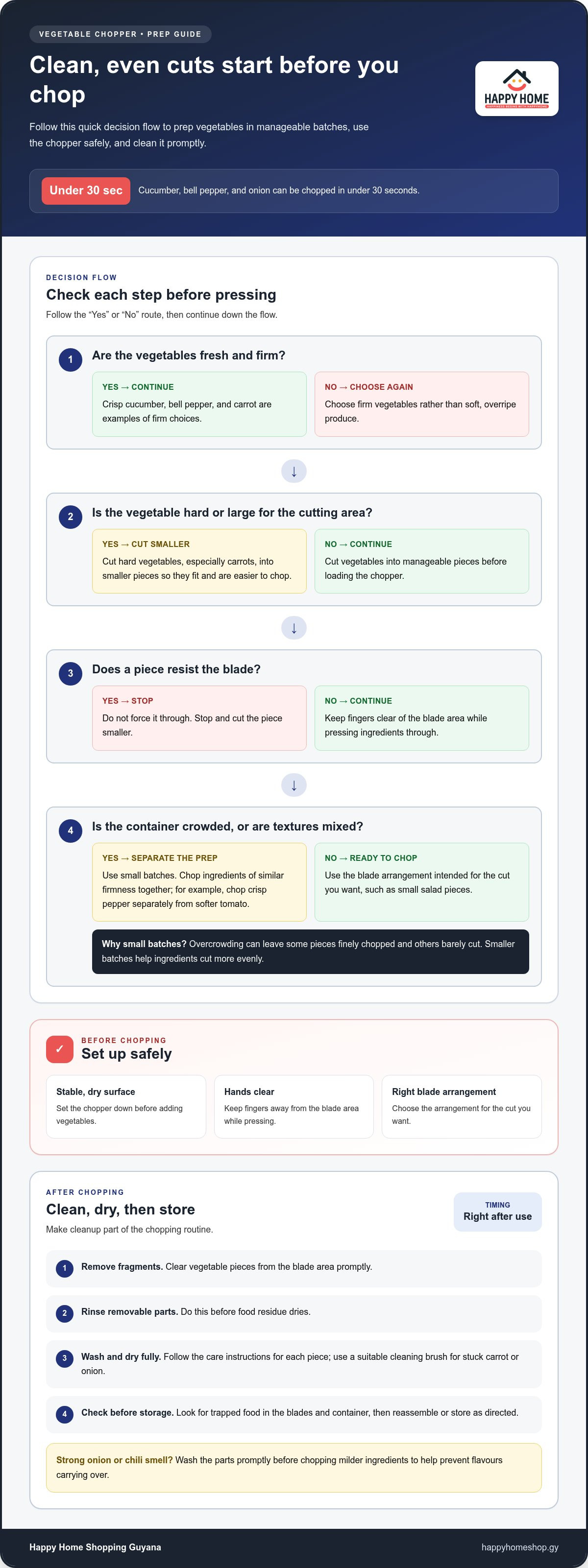
Firm vegetables give chopper blades a cleaner bite. Choose crisp cucumber, bell pepper, or carrot rather than soft, overripe produce. Cut hard vegetables, especially carrots, into smaller pieces first so they fit the cutting area and are easier to chop. If a piece resists, stop and cut it smaller instead of forcing it through.
Load ingredients in small batches for more even results. An overcrowded container can leave some pieces finely chopped and others barely cut. Chop a layer of cucumber, then repeat with the rest. Keep ingredients of similar firmness together in each batch. For example, chop crisp pepper separately from softer tomato, then combine them in your salad bowl.
- Set the chopper on a stable, dry work surface before adding vegetables.
- Keep fingers clear of the blade area while pressing ingredients through.
- Use the blade arrangement intended for the cut you want, such as small salad pieces.
Cleanup matters as much as chopping. Remove vegetable fragments from the blade area right after use, and rinse removable parts before food residue dries. Wash each piece according to its care instructions, then let it dry fully before storage. Avoid reaching across sharp edges; use a suitable cleaning brush to remove stuck carrot or onion. A clean blade area supports performance and kitchen hygiene.
Before storing the chopper, check the blades and container for trapped food. Dry the components thoroughly, then reassemble or store them as directed. If onion or chili leaves a strong smell, wash the parts promptly before chopping milder ingredients. This helps prevent flavours carrying over between batches, such as from salsa vegetables to cucumber salad.
For a convenient kitchen tool to support these prep steps, browse kitchen tools for meal preparation.
Make cleanup part of the routine: clean the vegetable chopper right after use to support performance and hygiene. Tackle it after each chopping session rather than leaving it as a separate task.
For each round of prep, portion vegetables into smaller batches and chop them in sequence. Keep the batches small throughout the task rather than combining them into one larger load. This simple adjustment improves cutting performance and helps avoid uneven results, making batch size a practical part of the chopping routine.
3. Benefits of using a vegetable chopper
A vegetable chopper can make repeated preparation feel more manageable. Cucumber, bell pepper, and onion can be chopped in under 30 seconds. That gives you a quick base for salads, wraps, or cooked dishes. Instead of cutting each piece by hand, press through a batch, then transfer the vegetables to a bowl.
Consistent pieces make meals easier to assemble. Similar-sized vegetables spread more evenly through a bowl, giving each serving a balanced mix. For a lunch bowl, pair chopped vegetables with grains or beans, then add soft toppings just before eating. This brings different ingredients together without making meal prep complicated.
Some vegetable chopper meal prep ideas can stretch across more than one meal. Chop a larger batch of onion and pepper, then divide it between a sandwich filling and a cooked dish. Store each portion separately so the right ingredients are easy to reach later. Planning portions first also helps avoid prepping more than you need.
A chopper makes it easier to vary meals using ingredients you already have. Dice firm vegetables for a lunch wrap, then reserve another portion for a grain bowl. If you’re preparing several dishes, work with one ingredient at a time. This keeps flavours distinct and makes it easier to assign each portion to a meal.
Not every ingredient needs the same approach. Firm bell pepper suits quick, even chopping, while leafy lettuce and delicate herbs may be better handled by hand. Match the tool to the vegetable and the texture you want. The best vegetable chopper meal prep ideas use the chopper for repetitive cuts and save fragile ingredients for final assembly.
To make prep practical, set out a cutting board and storage containers before you begin. Decide which vegetables belong in each meal, then chop and portion them as you go. Keep dressings and soft toppings separate until serving. This leaves you with ready-to-use ingredients and room to adjust each meal later.
4. Vegetable chopper meal prep FAQs
Manual vs electric: A manual chopper suits small batches and gives you direct control over each press. An electric model can suit repeated processing, but requires power and counter space. Choose based on your batch size, storage space, and most common cuts.
How long do chopped vegetables last in the fridge? It depends on the vegetable, its freshness, and how it’s stored. Keep pieces covered in a clean, airtight container, and use delicate or moist ingredients sooner than firm vegetables.
Can you freeze chopped vegetables? Yes, vegetables can be frozen after chopping, though thawing may soften their texture. Freezing works better for vegetables intended for cooked dishes than crisp salads. Portion them before freezing so you can take out what a recipe needs.
How should you store chopped vegetables? Dry washed vegetables well, then place them in a clean, airtight container in the fridge. Keep juicy ingredients separate from drier pieces, and store dressing apart from salad vegetables until serving.
Which vegetable chopper is best for meal prep in Guyana? Choose a manual multi-use chopper suited to your usual vegetables, preferred cuts, and storage space. Compare blade options, batch capacity, and ease of cleaning. These practical features matter more than functions you won’t use.
Which vegetables shouldn’t be chopped too far ahead? Watery vegetables, such as cucumber and tomato, can release moisture after cutting. Delicate lettuce and avocado can also lose their best texture. Chop these closer to serving and prepare firmer ingredients earlier.
For weekly prep, match the tool to your meals: crisp salad ingredients need different handling from vegetables headed for a cooked dish. Keep portions separate, label containers by recipe, and add dressings or soft toppings just before serving. Explore vegetable choppers for meal prep to find a practical tool for your kitchen routine.
Happy Home Shopping Guyana: Jade Leaf Matcha Organic Matcha Latte Mix
Happy Home Shopping Guyana offers the Yusshn 12 IN 1 Vegetable Chopper for everyday vegetable preparation. If you’re building a simple meal-prep routine, a dedicated chopper can help with the cutting step for salads and other home meals. Use the techniques in this guide to prepare firm vegetables in manageable batches, then store portions separately for easier meal assembly. The right tool depends on the ingredients you prepare and the space available in your kitchen. For a food-focused addition to your home routine, Happy Home Shopping Guyana also offers Jade Leaf Matcha Organic Matcha Latte Mix and Texas Pete Sriracha Hot Chile Sauce 18oz. Visit happyhomeshop.gy to explore the offerings.
Make Your Next Meal Prep Easier
Start your next meal plan with one simple question: which ingredients would make weekday meals easier to assemble? Pick a salad, lunch bowl, or cooked dish, then prepare only the vegetables you need. These vegetable chopper meal prep ideas can turn that plan into a practical routine.
Keep the process flexible. Prep crisp ingredients for lunch, then leave delicate toppings until serving, or set aside chopped vegetables for a cooked meal when salad isn’t on the menu. A small, repeatable routine makes it easier to use what’s already in your kitchen and add variety to everyday meals.
Choose the kitchen tools and food additions that fit your home cooking habits. For a closer look at what’s available, visit Happy Home Shopping Guyana. Take one useful idea into your next prep session, and make fresh meals feel a little more approachable.
Frequently Asked Questions
Why Use a Vegetable Chopper for Salads?
A vegetable chopper makes it easier to prepare a mix of salad ingredients without lengthy hand-cutting. It’s useful when you want to tailor each bowl to different tastes: prepare a shared base, then offer olives, cheese, or other toppings separately. For a family lunch, everyone can personalize their salad while the main ingredients are ready together.
